

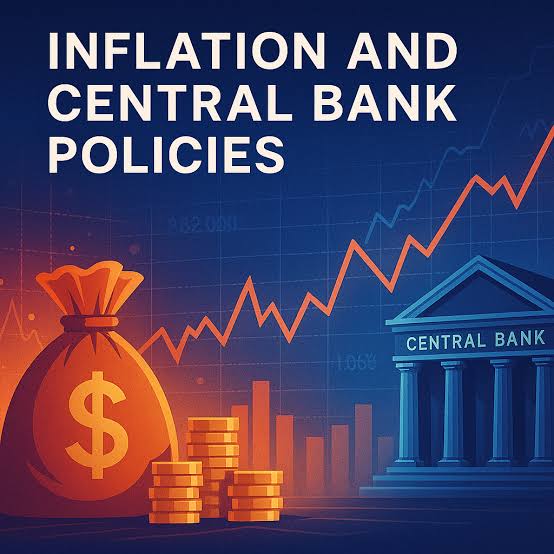
Global financial markets are closely watching signals from central banks as hints emerge that the long cycle of interest rate hikes may be nearing its end. After several years of tightening monetary policy to combat high inflation, many economies are now experiencing a gradual slowdown in price increases, prompting discussions about a possible policy pivot in the coming months.
The U.S. Federal Reserve, European Central Bank (ECB), and Bank of England have all maintained restrictive interest rate levels since inflation surged globally in the aftermath of pandemic-era stimulus measures, supply chain disruptions, and energy shocks. However, recent economic data suggests that inflation is steadily moving closer to target levels in several advanced economies, encouraging policymakers to reassess their strategies.
Despite this progress, central bankers are emphasizing that it is too early to declare victory. Service-sector inflation remains stubbornly high, driven largely by wage growth and strong labor markets. In many developed economies, unemployment rates remain historically low, giving workers more bargaining power and keeping wage pressures elevated. This dynamic has made it difficult for inflation to fully return to the 2% target range set by most major central banks.
In the United States, recent economic indicators show that while goods inflation has cooled significantly, housing and healthcare costs continue to rise. The Federal Reserve has adopted a “wait-and-watch” approach, signaling that future decisions will depend heavily on incoming data. Markets are increasingly pricing in the possibility of interest rate cuts in the medium term, but officials have repeatedly warned against premature expectations.
In Europe, the ECB is facing a similar balancing act. Inflation has eased compared to its peak, but economic growth remains weak across several member states. Germany and France have shown sluggish industrial output, raising concerns about the risk of prolonged stagnation if borrowing costs remain too high for too long. Policymakers are therefore under pressure to carefully time any shift in monetary policy without reigniting inflation.
In emerging markets such as India, Brazil, and Indonesia, central banks have also paused aggressive tightening cycles. These economies face a more complex challenge: managing inflation while supporting growth and currency stability. In India, for example, food inflation continues to be volatile due to unpredictable weather patterns and supply chain disruptions, even as core inflation shows signs of moderation.
Financial markets have responded strongly to the evolving outlook. Equity markets have generally rallied on expectations that borrowing costs may eventually decline, while bond yields have fluctuated as investors try to predict the timing of central bank decisions. However, volatility remains high due to geopolitical risks and uncertainty over global economic growth.
Energy prices continue to play a crucial role in shaping inflation expectations. Although oil and gas markets have stabilized compared to earlier shocks, supply risks persist due to geopolitical tensions in key producing regions. Any sudden disruption could quickly reverse the recent disinflation trend, forcing central banks to reconsider easing plans.
Economists also highlight structural changes in the global economy that may influence future inflation patterns. Deglobalization trends, supply chain diversification, and increased climate-related disruptions could lead to more frequent price shocks in the coming years. This has led some analysts to argue that the “low inflation era” of the 2010s may not return soon.
For now, central banks are expected to maintain a cautious stance, carefully balancing the risks of overtightening against the danger of inflation re-accelerating. The coming months will be critical in determining whether the global economy achieves a soft landing or faces renewed instability.
In conclusion, while inflation has clearly moved away from its peak levels, the path ahead remains uncertain. Policymakers are signaling patience rather than urgency, as they wait for clearer evidence that inflation is sustainably under control before making major policy shifts.