

Global goods trade remained strong during the first half of 2026, reaching an estimated $13.7 trillion, according to the United Nations Conference on Trade and Development (UNCTAD). The figure represents an increase of around 12.5% compared with the first half of 2025, showing that international trade has continued to expand despite geopolitical tensions, higher costs and uncertainty around global trade policies.
The increase is an important sign for the global economy because international trade has been facing several challenges this year. Rising energy prices, disruptions to shipping routes and changing trade policies have increased costs for businesses. Even with these pressures, companies and consumers have continued to participate in global markets, helping overall trade values move higher.
However, the headline growth figure needs some context. UNCTAD said a significant part of the increase in the value of global goods trade has been driven by higher prices rather than a similar increase in the physical volume of goods being traded. Prices of traded goods increased by about 3.6% in the first quarter, while the increase was estimated at around 5% in the second quarter.
Energy costs have been one of the major factors behind the increase in trade prices. Disruptions to shipping through the Strait of Hormuz, along with concerns about energy supplies, have pushed up costs across several parts of the global supply chain. Higher energy prices can affect transportation, manufacturing, logistics and the final price of products sold internationally.
The rise in goods trade has also been supported by strong performance from several major Asian economies. UNCTAD data pointed to East Asia as an important driver of global trade growth, with China and South Korea recording strong export and import activity. South Korea’s exports increased by about 20%, while China’s exports grew by around 11% during the period covered by the report.
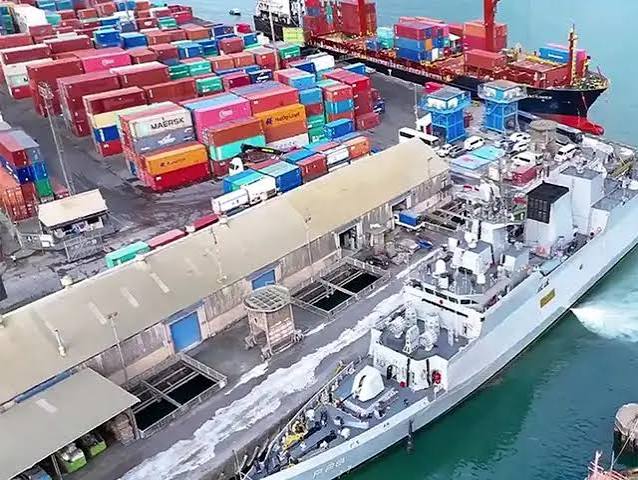
China continues to play a particularly important role in international trade because of its position as one of the world’s largest manufacturing and exporting economies. Its imports also increased, reflecting continued demand for goods and raw materials. South Korea’s strong export performance, meanwhile, highlights the importance of technology and high-value manufactured products in global trade.
The services sector has also expanded, although at a slower pace than goods. Global trade in services grew by approximately 10.5% compared with the first half of 2025. This reflects continued demand for areas such as information technology, financial services, business services, transport and tourism.
For businesses, the latest figures present both opportunities and challenges. Strong international demand can support manufacturing, exports and investment. Companies with established global supply chains may benefit from higher demand for products in different markets. At the same time, higher shipping and energy costs can reduce profit margins and make it more expensive to move goods across borders.
The global trade picture is also becoming increasingly uneven. Some countries and industries are growing quickly, while others are facing weaker demand or higher trade costs. Geopolitical tensions and changes in government trade policies are making it more difficult for businesses to plan their international operations over the long term.
Another major issue is the changing structure of global supply chains. Companies are increasingly looking at ways to diversify production and reduce their dependence on individual countries or shipping routes. This could create new opportunities for emerging economies that are able to attract manufacturing investment and build reliable logistics infrastructure.
For countries such as India, Vietnam and other developing economies, the changing global supply-chain environment could create opportunities to increase their role in international manufacturing and exports. Businesses that can offer competitive costs, reliable production and access to major markets may attract more investment as companies look for alternatives and additional production locations.
Despite the strong first-half performance, UNCTAD has warned that global trade growth is becoming more uneven. Higher prices, geopolitical risks, trade restrictions and rising costs could create challenges during the remainder of 2026. The performance of energy markets and international shipping routes will remain particularly important.
The $13.7 trillion figure nevertheless shows the scale of global economic activity. International trade continues to connect manufacturers, suppliers and consumers across continents, even as businesses deal with a more complicated operating environment.
The key question for the rest of the year will be whether the strong growth in trade value can be maintained and whether it will increasingly reflect higher trade volumes rather than simply rising prices. If global demand remains stable and supply-chain disruptions ease, international trade could continue expanding. But prolonged geopolitical tensions and higher costs could make the second half of 2026 more difficult.
For now, the first-half numbers provide a positive signal for global commerce. Global goods trade reaching approximately $13.7 trillion, up 12.5% year on year, shows that international trade remains a major engine of economic activity despite the challenges facing businesses around the world.