

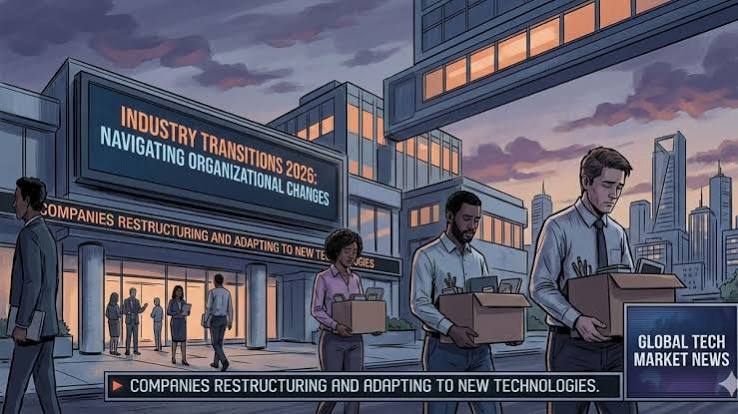
Nearly 40 major global companies, including Amazon, Meta, Oracle, Dell, Walmart, and Target, have continued workforce restructuring initiatives throughout 2026 as businesses accelerate artificial intelligence adoption and broader operational efficiency programs. The trend reflects how companies across technology, retail, finance, manufacturing, and logistics are redesigning their organizations to improve productivity, reduce costs, and prepare for an increasingly AI-powered business environment.
Over the past year, enterprises have expanded investments in artificial intelligence, automation, cloud computing, and digital transformation. Rather than relying solely on traditional business models, many organizations are integrating AI into customer service, software development, supply chain management, finance, human resources, and marketing operations. As these technologies become more capable, companies are reassessing workforce requirements and reorganizing teams to align with evolving business priorities.
Industry analysts note that workforce restructuring does not always mean large-scale layoffs. In many cases, companies are consolidating departments, eliminating duplicate roles, creating new AI-focused positions, and reallocating talent toward high-growth business areas. Businesses are also increasing investments in employee reskilling programs to help workers adapt to emerging technologies and changing job requirements.
Technology companies remain at the center of this transformation. AI-powered coding assistants, automated customer support platforms, predictive analytics, and intelligent workflow systems are allowing organizations to streamline routine operations while improving overall efficiency. Retail companies are also using AI to optimize inventory management, demand forecasting, pricing strategies, logistics, and personalized customer experiences.
Executives across industries increasingly view artificial intelligence as a long-term productivity driver rather than simply a technology upgrade. Many organizations are focusing on building leaner operating structures while directing more resources toward innovation, cybersecurity, cloud infrastructure, and AI research. This strategic shift is intended to strengthen competitiveness in rapidly changing global markets.
Despite concerns about job displacement, labor market experts believe the AI transition is also creating new employment opportunities. Demand continues to grow for AI engineers, data scientists, cybersecurity specialists, cloud architects, machine learning experts, and professionals capable of managing AI-enabled business processes. Companies are placing greater emphasis on digital skills, continuous learning, and workforce adaptability to prepare employees for future roles.
Business leaders also recognize that successful AI adoption requires responsible implementation. Human oversight, ethical governance, data privacy, regulatory compliance, and transparency remain critical as organizations deploy AI across business functions. Experts argue that balancing automation with human expertise will be essential for maintaining customer trust and long-term organizational success.
Financial markets have generally viewed these restructuring efforts as part of broader corporate transformation strategies. Investors are closely monitoring whether AI investments translate into higher productivity, stronger profit margins, faster innovation, and sustainable long-term growth. Companies that successfully integrate AI while maintaining operational resilience are expected to strengthen their competitive positions in the years ahead.
The continued workforce restructuring seen across nearly 40 major global companies highlights a broader shift in the global economy. As artificial intelligence becomes deeply embedded in everyday business operations, organizations are redesigning their workforce models to remain agile, efficient, and innovation-driven. While the transition presents challenges for both employers and employees, it also marks the beginning of a new era in which technology and human talent are expected to work together to drive future business growth.