
Artificial intelligence (AI) is emerging as one of the most powerful drivers of economic transformation for India, with recent projections suggesting that its integration into the education sector alone could contribute as much as $2.6 trillion to the country’s GDP over the long term. This estimate reflects the potential impact of AI in improving learning outcomes, expanding access to quality education, and creating a more skilled workforce capable of supporting high-growth industries.
At the heart of this projection is the idea that education is the foundation of economic productivity. India has one of the world’s largest student populations, but it also faces long-standing challenges such as uneven quality of schooling, teacher shortages in rural regions, and a significant gap between academic learning and industry-required skills. AI-powered education systems are expected to help bridge these gaps by personalizing learning, scaling access, and improving teaching efficiency.
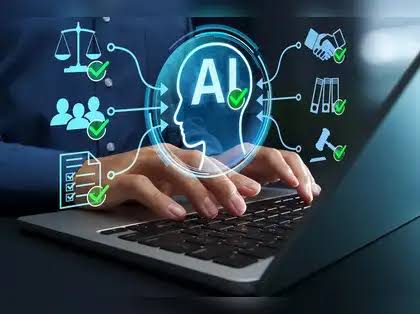
One of the most important contributions of AI in education is personalized learning. AI-driven platforms can track a student’s progress in real time and adjust lessons based on individual strengths and weaknesses. For instance, if a student struggles with algebra, the system can automatically provide additional exercises, simplified explanations, or interactive video lessons. On the other hand, advanced learners can be given more challenging problems or introduced to higher-level concepts earlier. This kind of customization, once impossible in large classrooms, helps students learn at their own pace and improves overall retention and understanding.
Another major advantage is scalability. AI-based educational tools can deliver high-quality instruction to millions of learners simultaneously, regardless of geography. This is particularly significant for rural and semi-urban areas in India, where access to experienced teachers, specialized subjects, or coaching centers is often limited. With AI-powered digital platforms, students in remote regions can access the same level of instruction as those in major cities, reducing inequality in educational outcomes.
Teachers also stand to benefit significantly from AI integration. Many AI systems can automate time-consuming administrative tasks such as grading assignments, preparing reports, tracking attendance, and even generating feedback on student performance. This allows teachers to focus more on interactive teaching, mentoring, and addressing individual student needs. Over time, this shift can improve both teaching quality and job satisfaction among educators.
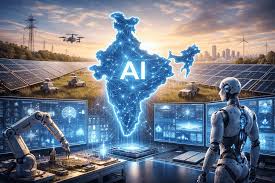
The estimated $2.6 trillion GDP impact is based on long-term economic modeling that considers several interconnected factors. These include improved employability of graduates, higher labor productivity, increased participation in high-skill industries, and overall expansion of the digital economy. As students become more skilled through AI-enhanced learning, they are more likely to secure better-paying jobs, contribute to innovation, and increase consumption levels, all of which drive economic growth.
The ripple effects extend far beyond the education sector. A more skilled workforce strengthens industries such as information technology, healthcare, manufacturing, financial services, and research and development. This creates a multiplier effect where improvements in education lead to higher productivity across the entire economy. Additionally, AI-driven upskilling can help India compete more effectively in the global digital economy, attracting investment and boosting exports of services.
However, experts also caution that realizing this potential requires careful planning and policy support. Infrastructure gaps such as limited internet access, lack of affordable devices, and uneven digital literacy could slow adoption in certain regions. There are also concerns about data privacy, algorithmic bias, and overdependence on technology, which need strong regulatory frameworks.
Equally important is the role of teachers in this transformation. AI is not expected to replace educators but to act as a supportive tool that enhances their effectiveness. Training teachers to use AI systems effectively and integrate them into classroom instruction will be critical for achieving meaningful outcomes.
In conclusion, the projection that AI in education could add $2.6 trillion to India’s GDP highlights the transformative power of combining technology with human capital development. While the figure represents an optimistic long-term scenario, the direction is clear: AI has the potential to revolutionize education, bridge skill gaps, and significantly accelerate economic growth if implemented inclusively and responsibly.