

A global investment surge in big technology companies has intensified concerns among economists and market analysts about rising financial risks, overvaluation, and potential market instability. The boom—driven largely by artificial intelligence (AI), cloud computing, and semiconductor demand—has pushed valuations of leading tech firms to historic highs while concentrating market power in a small group of companies.
The rally has been fueled by massive capital spending from major technology firms in the United States and other advanced economies. Companies such as those in cloud services, AI chip manufacturing, and digital platforms are investing heavily in data centers, high-performance computing systems, and AI model development. This spending wave is seen as foundational to the next phase of the digital economy, but it has also raised questions about whether current growth expectations are realistic.
A key concern among analysts is market concentration. A small number of large-cap technology companies now account for a disproportionate share of gains in major stock indices. This concentration increases systemic risk because any slowdown in earnings or AI demand could trigger broad market corrections. Investors are increasingly comparing the current AI-driven rally to previous technology booms, where expectations outpaced actual revenue growth.
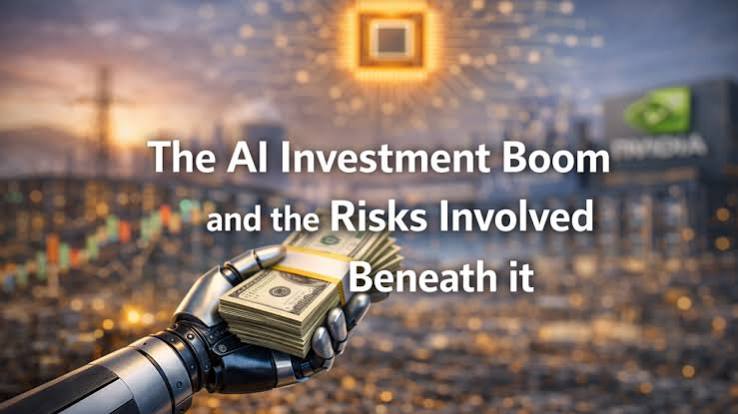
Another risk factor is the scale of capital expenditure. Big tech companies are committing hundreds of billions of dollars globally to AI infrastructure, including advanced chips, energy-intensive data centers, and cloud networks. While these investments are expected to support long-term productivity gains, the payback period remains uncertain. If AI monetization slows or adoption is weaker than expected, companies could face pressure on profit margins.
Debt markets are also indirectly affected. Although many large tech firms have strong balance sheets, the broader ecosystem—including startups and infrastructure providers—is increasingly relying on debt financing to expand AI capabilities. Rising borrowing costs in some economies could strain smaller players in the technology supply chain.
At the same time, investor enthusiasm continues to drive valuations higher, particularly in AI-related stocks. Expectations of future earnings growth have outpaced current revenue generation in some segments, leading to concerns about speculative behavior. Market observers warn that if earnings fail to match expectations, volatility could increase sharply.
Energy demand is another emerging risk tied to the tech boom. AI data centers require vast amounts of electricity, raising concerns about long-term energy sustainability and cost pressures. In regions where power infrastructure is limited, this could become a bottleneck for expansion.
Despite these risks, supporters of the investment surge argue that AI represents a structural shift comparable to the rise of the internet or mobile computing. They point to strong corporate earnings, rapid adoption of AI tools across industries, and continued enterprise spending as evidence that the trend is supported by real demand rather than speculation alone.
Regulators are also beginning to pay closer attention. Issues such as data privacy, market dominance, competition law, and AI governance are becoming more prominent as governments assess the long-term implications of concentrated technological power.
Overall, while the big tech investment boom is driving innovation and economic growth, it is also increasing financial and systemic risks. The balance between rapid technological progress and market stability will likely remain a central theme for global investors in the coming years.