

Europe’s record-breaking summer heat is turning into an economic problem, with a new analysis warning that extreme heat and drought could cost the European Union economy around €180 billion this year. The estimated loss is equal to roughly 1% of the EU’s GDP and is close to the amount of economic growth the bloc was expected to achieve in 2026.
The estimate comes from Dutch bank Triodos, which examined the economic impact of prolonged heat, drought and related disruptions across Europe. The findings suggest that extreme weather could effectively wipe out a large part of the economic growth expected this year.
One of the biggest impacts is being felt in the workplace. Extremely high temperatures can make it difficult for people to work safely and efficiently, particularly in construction, agriculture, transport and other outdoor industries. Even office-based businesses can face lower productivity when workers struggle with excessive heat. Labour productivity is considered one of the largest and hardest-to-measure economic costs of the current heatwave.
Agriculture is another major area under pressure. High temperatures and drought conditions are reducing crop yields in several parts of Europe. Lower agricultural production can push up food prices while also hurting farmers’ incomes. The impact is not limited to individual countries because weaker harvests can affect food supply chains across the European market.
The energy sector is also facing problems. Low water levels in rivers can affect hydroelectric power generation and reduce the availability of water needed to cool thermal and nuclear power plants. France, for example, has experienced disruptions at several nuclear reactors because high water temperatures and low river levels have made normal operations more difficult.
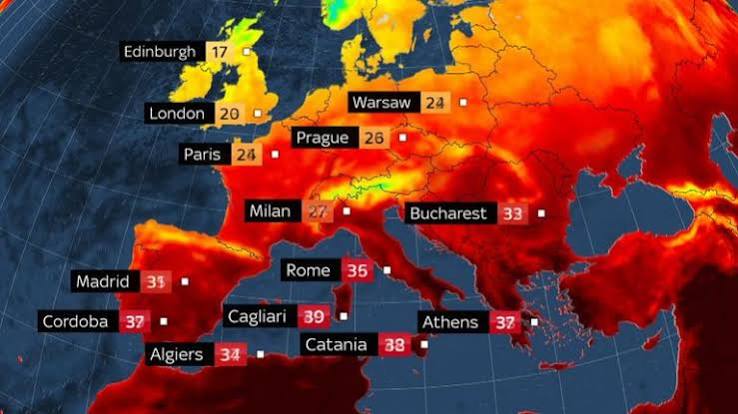
Transport networks are another concern. Europe’s major rivers, including the Rhine, have experienced unusually low water levels. This can limit the amount of cargo ships can carry and increase transportation costs. The Rhine is particularly important for Germany and other industrial economies because it connects major manufacturing areas with ports and international markets.
France is among the countries facing a significant economic impact. The French environment minister said the country’s recent heatwaves could result in €10 billion to €15 billion in direct and indirect costs. The damage includes the effects of wildfires, drought, agriculture losses and pressure on water supplies.
The United Kingdom is also experiencing substantial losses. A separate analysis estimated that heatwaves had already reduced UK economic output by around £4.4 billion by the end of July. Reduced worker productivity, overheating equipment and disruptions to business activity were among the factors behind the losses.
The heatwave is also affecting tourism and hospitality. Extremely high temperatures can discourage people from travelling, eating outdoors or participating in daytime activities. Businesses in southern Europe that depend heavily on tourism could therefore face weaker revenues during periods of extreme heat. At the same time, electricity demand can rise as households and businesses use more air conditioning.
For financial markets, the situation creates another challenge at a time when European economies are already dealing with high energy costs, trade uncertainty and geopolitical risks. A large weather-related economic shock could make it harder for governments and companies to maintain growth.
The problem is also becoming increasingly important for insurers. Many business losses caused by extreme heat are not covered by traditional insurance policies. Reuters reported that more than 80% of surveyed businesses in Padua, Italy, experienced a 20% decline in turnover during recent heatwaves, while insurance payouts covered only a small portion of the wider economic losses.
The €180 billion figure is an estimate rather than a guaranteed loss, and the final economic impact will depend on how long the extreme weather continues and how European economies adapt. However, the scale of the estimate highlights a growing issue for governments and businesses: extreme heat is no longer only an environmental concern. It is becoming a direct economic risk.
For Europe, the challenge now is not simply dealing with one unusually hot summer. Businesses and governments may need to invest more in water infrastructure, resilient transport networks, energy systems and workplaces that can operate safely in extreme temperatures.
If heatwaves and droughts become more frequent, the economic costs could continue to rise. The current estimate of €180 billion therefore serves as a warning that climate-related disruption could increasingly influence Europe’s growth, inflation, employment and investment decisions.