
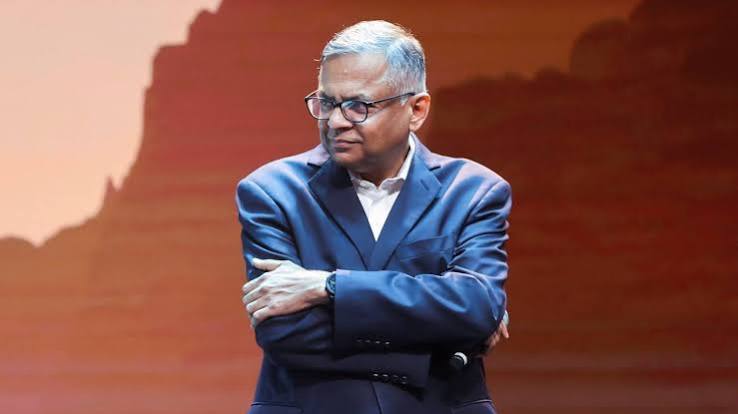
N. Chandrasekaran, the chairman of Tata Sons, has decided not to seek another term and will step down when his current tenure ends on February 20, 2027. His decision brings an end to nearly a decade of leadership at one of India’s most influential business groups and opens the way for a major transition at the top of the Tata Group.
Chandrasekaran took charge of Tata Sons in February 2017, succeeding Cyrus Mistry after a highly publicised leadership dispute. He became the first professional executive and the first non-Parsi chairman to lead the Tata Group. Before taking the top position, he had spent decades within Tata companies and served as chief executive of Tata Consultancy Services (TCS).
During his tenure, Chandrasekaran oversaw one of the biggest periods of strategic expansion in Tata’s modern history. The group moved aggressively into sectors such as aviation, electronics, semiconductors, batteries and digital businesses, while continuing to expand its established operations in automobiles, technology, steel, consumer products and financial services.
One of the most visible decisions under his leadership was Tata’s return to the airline business. The group took control of Air India and subsequently completed the merger of Vistara with Air India, creating a much larger full-service airline. The aviation strategy was intended to build a stronger Indian airline capable of competing in international markets.
Tata also began making major investments in India’s emerging electronics and semiconductor ecosystem. The group has been building manufacturing capabilities in areas including semiconductor fabrication and electronics assembly, reflecting India’s wider push to reduce dependence on imported technology and attract global supply-chain investment.
The group has also expanded its presence in battery manufacturing and electric-mobility-related businesses. These investments show how Tata has been positioning itself for industries expected to play an important role in India’s next phase of industrial growth.
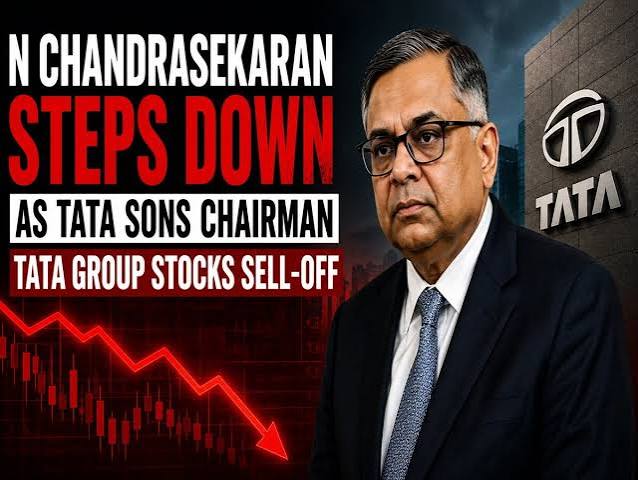
However, Chandrasekaran’s departure comes after months of uncertainty surrounding his reappointment. His next five-year term had been recommended by the Sir Dorabji Tata Trust and Sir Ratan Tata Trust, and the recommendation had also gone through the Tata Sons nomination and remuneration process. The proposal was placed before the Tata Sons board in February 2026, but the board did not reach the required consensus.
The situation became particularly important because Tata Trusts owns around 66% of Tata Sons and therefore has significant influence over the holding company’s governance. Reuters reported that differences had emerged between Chandrasekaran and Tata Trusts chairman Noel Tata over several strategic issues, including the future of Tata Sons and some major group businesses.
Rather than allowing uncertainty over the leadership question to continue, Chandrasekaran has chosen not to seek reappointment. He will continue in the role until the end of his current term, giving the group time to work on the succession process.
The announcement immediately attracted attention from stock-market investors. Shares of several major Tata companies came under pressure after the news, with TCS, Tata Steel and other Tata-linked stocks falling during the trading session. TCS was among the most closely watched counters because Chandrasekaran remains closely associated with the technology company, where he previously served as CEO.
The market reaction reflects the importance of leadership continuity for a conglomerate as large and diversified as Tata. Investors will want to know whether the next chairman will continue Chandrasekaran’s strategy or introduce changes in capital allocation, expansion plans and the group’s approach to new businesses.
The succession process will now become one of the most important corporate developments for the Tata Group. Tata Sons has a special mechanism for selecting its chairman, with the principal Tata Trusts playing a decisive role in the process. The group has not yet publicly announced a final successor.
Chandrasekaran’s nearly decade-long tenure has also coincided with a significant increase in Tata’s focus on large-scale capital expenditure. The group has committed substantial resources to new businesses that could take years to generate returns. Semiconductor manufacturing, battery plants, aviation and electronics all require significant investment and long-term execution.
That makes the next chairman’s role particularly important. The new leadership will have to balance these ambitious investments with the performance of mature businesses such as TCS, Tata Motors, Tata Steel, Titan and Tata Consumer Products.
There are also challenges that the group will have to address. Air India’s turnaround requires substantial investment, while Tata Motors has faced pressure in parts of its global automotive business. The group’s semiconductor and electronics ambitions are still at an early stage and will require careful execution.
Despite those challenges, Chandrasekaran leaves behind a group that is considerably broader than the one he inherited in 2017. Tata has moved further into sectors that are strategically important to India’s industrial and technological ambitions.
For employees, investors and business partners, the transition will therefore be closely watched. The Tata brand has historically placed enormous importance on stability, reputation and long-term decision-making, making the appointment of the next chairman a particularly significant event.
Chandrasekaran himself has described the need for clarity on leadership as an important reason behind his decision. He has said that his current term will run until February 20, 2027, after which he will leave the chairman’s position.
The leadership change does not mean that Tata’s existing businesses or investment plans will immediately change. Most decisions will continue to be handled by the management teams of individual Tata companies. However, the chairman of Tata Sons plays an important role in setting the broader direction of the group.
The coming months will therefore be important for investors as Tata Sons works toward selecting a successor. The new chairman will inherit a group with enormous scale, strong global businesses and an ambitious investment pipeline — but also significant strategic decisions ahead.
N. Chandrasekaran’s planned exit marks the end of an important chapter for Tata Group. His tenure transformed Tata’s portfolio and pushed the conglomerate into several new-age industries. The next chairman will now face the challenge of building on that transformation while maintaining the financial discipline and long-term reputation that have traditionally defined the Tata Group.