
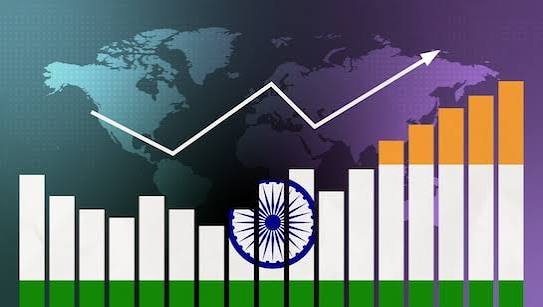
The global economy in 2026 stands at a delicate crossroads. Inflation has retreated from the extreme highs of recent years, financial systems are broadly stable, and growth continues in many major economies. Yet beneath this surface calm lies a deeper and more persistent challenge: uncertainty has become structural rather than temporary.
This shift demands a change in how policymakers think. For much of the past decade, economic policy was dominated by short-term crisis management—first responding to inflation shocks, then stabilizing growth, and more recently balancing employment with price stability. But the current environment requires something more difficult: patience, coordination, and long-term discipline.
Central banks, in particular, face a narrowing policy corridor. While inflation is moderating, it is not fully subdued in several key sectors such as services, housing, and food. At the same time, high interest rates have begun to strain borrowers, governments, and financial markets. The temptation to ease policy quickly is understandable, but history shows that premature easing can undo years of progress. Stability, once lost, is costly to rebuild.
Fiscal policy is equally constrained. Public debt levels remain elevated in many economies following years of crisis-driven spending. Governments now face a difficult trade-off: reduce deficits without weakening growth. The most effective path forward is not aggressive austerity or unchecked spending, but smarter allocation of resources—focused on productivity-enhancing investments such as infrastructure, education, and digital systems.
Another defining feature of the current economic landscape is fragmentation. Global trade is no longer expanding with the same cohesion seen in earlier decades. Instead, supply chains are being restructured along geopolitical and regional lines. While this may increase resilience in certain cases, it also introduces inefficiencies and raises costs. The challenge for policymakers is to avoid turning economic resilience into economic isolation.
Technology adds another layer of complexity. Artificial intelligence and automation are transforming productivity, but they are also reshaping labor markets at an unprecedented pace. The benefits of this transformation are real, but uneven. Without proactive investment in reskilling and education, inequality could deepen, and large segments of the workforce risk being left behind. The editorial view is clear: technological progress must be matched with social adaptation.
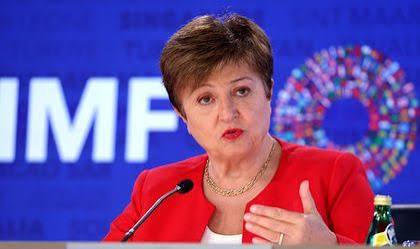
Emerging economies face a particularly difficult balancing act. Countries like India continue to show strong domestic demand and structural growth potential, but they remain exposed to global financial volatility, commodity price shocks, and climate risks. For these economies, stability depends not only on domestic policy strength but also on external conditions they cannot fully control.
Climate change is no longer a distant concern—it is a present economic force. Extreme weather events are already affecting agriculture, infrastructure, and insurance systems worldwide. Treating climate adaptation as a secondary policy issue is no longer viable. It must be integrated directly into economic planning and investment strategies.
The editorial position is that the world economy is not lacking in tools, but in coordination. Institutions exist to manage trade, finance, and monetary stability, yet global cooperation has weakened at a time when it is most needed. Without stronger alignment between major economies, policy divergence will continue to create volatility.