

Asian stock markets are heading toward their strongest weekly performance in about two months as investors become less worried about another interest-rate hike from the U.S. Federal Reserve. Softer-than-expected U.S. inflation data has encouraged investors to move back into riskier assets, giving shares across the region a fresh boost.
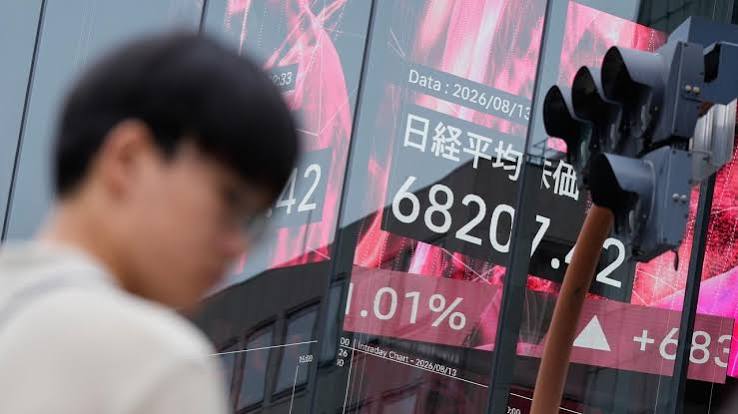
On Friday, Asian markets continued to trade higher, with South Korea’s KOSPI rising around 1.8% and Japan’s Nikkei gaining about 1.5%. MSCI’s broadest index of Asia-Pacific shares was on track for a weekly gain of roughly 2.6%, which would make it the region’s best week since June.
The main driver behind the rally has been a change in expectations about U.S. monetary policy. Recent inflation figures have shown that price pressures are not accelerating as quickly as some investors had feared. U.S. producer prices were unchanged in July, while annual producer-price inflation slowed to 4.7% from 5.5% in June. The data reduced concerns that the Federal Reserve would need to raise interest rates again soon.
Markets have reacted quickly to the change in expectations. According to market pricing, the probability of a Fed rate hike at the September meeting has fallen significantly from the previous week. Investors now see a rate increase as much less likely in the near term, giving global equity markets more room to recover.
Lower expectations for U.S. interest rates are particularly important for Asian markets because higher American rates can attract money toward U.S. assets and away from emerging markets. When investors expect rates to remain stable, or eventually fall, they are generally more comfortable putting money into stocks and other higher-risk investments.
Technology and semiconductor companies have been among the biggest beneficiaries. South Korea’s large chipmakers have attracted strong buying as investors continue to see artificial intelligence as a major source of future demand. The country’s technology sector has already experienced significant volatility this year, but the latest improvement in global risk appetite has helped shares recover.
Japan has also benefited from the stronger mood. The Nikkei has continued to gain as investors respond to the softer U.S. inflation numbers and improving global technology sentiment. However, Japan has its own monetary-policy issue to deal with, as traders are increasingly watching the possibility of a Bank of Japan rate hike in September.
The rally is not limited to stocks. Falling expectations for a U.S. rate hike have also influenced currencies and government bonds. The U.S. dollar has come under some pressure, while lower Treasury yields have provided additional support for equity markets.
Still, investors are not ignoring the risks. The biggest concern remains the situation in the Middle East and its impact on oil prices. Brent crude is heading for a weekly increase of about 4%, and any sharp rise in energy prices could put fresh pressure on inflation. Higher oil prices could once again force investors to reconsider their expectations for U.S. interest rates.
The geopolitical situation is therefore an important factor for Asian markets. If tensions increase and energy prices rise sharply, the current improvement in inflation expectations could quickly reverse. On the other hand, signs of progress toward ending the conflict could provide another boost to global stocks.
Investors are also watching corporate earnings and the continuing boom in artificial intelligence. Strong demand for AI infrastructure and semiconductors has supported technology shares across Asia, although recent market volatility has reminded investors that high-growth sectors can experience sharp corrections.
For now, the overall mood remains positive. The combination of softer U.S. inflation, lower expectations for a Fed rate hike and continued interest in technology stocks has given Asian markets one of their strongest weeks in recent months.
The rally will now face an important test. Investors will be looking at upcoming U.S. economic data, Federal Reserve comments, oil prices and developments in the Middle East to determine whether the improvement in sentiment can continue.
If inflation remains under control and the Fed stays away from another rate increase, Asian equities could receive further support. But if energy prices rise sharply or inflation begins accelerating again, the market could quickly become more cautious.
For now, however, investors are taking the latest U.S. data as a positive signal. Asian stocks are on course for their best weekly performance in two months, helped by fading fears of another Federal Reserve rate hike and renewed confidence in global risk assets.