
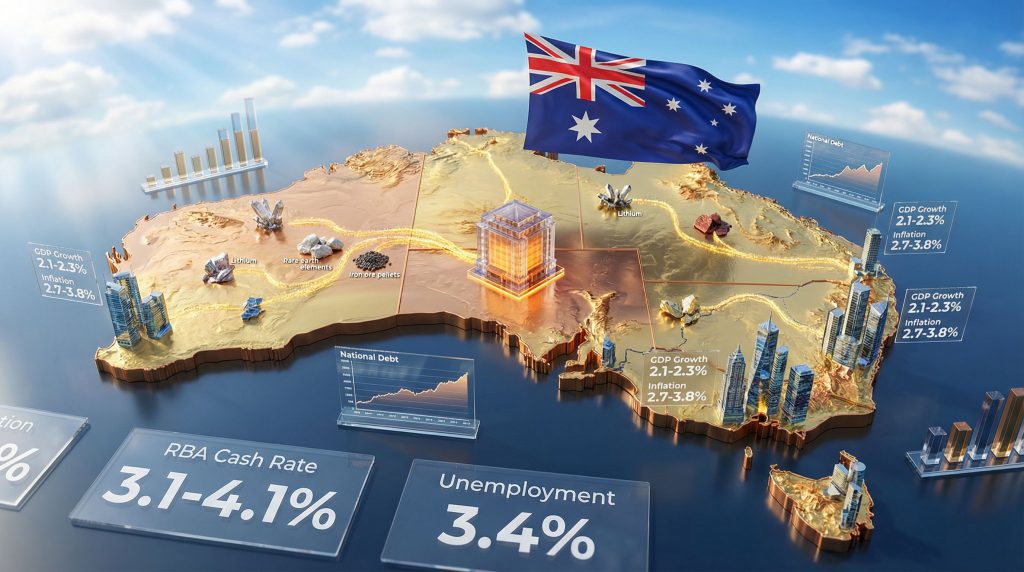
Australia’s economy continues to navigate a period of change as policymakers focus on maintaining growth, controlling inflation, supporting employment, and strengthening long-term investment. With global economic uncertainty, changing interest rates, and shifts in consumer spending patterns influencing economic conditions, the Australian government and the Reserve Bank of Australia (RBA) are working to maintain stability while supporting sustainable development.
Inflation remains one of the major challenges for Australia’s economy. Rising costs of housing, energy, food, and services have affected household budgets and business expenses. The Reserve Bank of Australia continues to monitor inflation trends closely and uses interest rate decisions as a key tool to maintain price stability. The central bank aims to bring inflation back to its target range while avoiding unnecessary pressure on economic growth.
Interest rates have played an important role in shaping economic activity. Higher borrowing costs have affected household spending, mortgage repayments, and business investment decisions. While tighter monetary conditions help reduce inflation pressures, policymakers must also consider their impact on consumer confidence and economic expansion.

The Australian government is focusing on strengthening economic growth through investment in infrastructure, renewable energy, technology, and skills development. Large-scale infrastructure projects are expected to create employment opportunities while improving productivity across industries. Investment in clean energy is also becoming a major priority as Australia works toward a more sustainable economy.
Australia’s natural resources sector continues to play a significant role in economic performance. The country remains one of the world’s major exporters of commodities such as iron ore, natural gas, and minerals. Demand from international markets, particularly Asia, continues to influence export earnings and economic growth. However, policymakers are also working to diversify the economy and reduce dependence on traditional resource industries.
The transition towards renewable energy has become an important part of Australia’s economic strategy. The country has significant potential in solar, wind, hydrogen, and critical minerals needed for clean energy technologies. Government policies supporting renewable energy investment are aimed at creating new industries, attracting investment, and generating future employment opportunities.
The labour market remains a key strength of the Australian economy. Employment levels have remained relatively strong, supported by activity in services, construction, healthcare, and technology sectors. However, businesses continue to face challenges related to skills shortages and workforce availability. Training programmes and migration policies are being considered to address labour market needs.
Small businesses and entrepreneurs continue to contribute significantly to Australia’s economy. Government support measures, digital adoption, and access to finance are helping businesses manage changing economic conditions. Small and medium-sized enterprises remain important contributors to employment and innovation.
Australia’s trade relationships also influence economic performance. Strong connections with regional partners, particularly in the Asia-Pacific region, support exports and investment opportunities. Changes in global demand, commodity prices, and international economic conditions remain important factors affecting Australia’s outlook.
The housing market is another area receiving close attention. Rising interest rates have influenced property demand and affordability, creating challenges for many households. Government initiatives focused on housing supply and affordability aim to address some of these pressures.
Economists expect Australia’s economic performance to depend on how effectively policymakers manage inflation, encourage investment, and support productivity growth. A balanced approach will be important to ensure that inflation declines while economic activity remains stable.
Overall, Australia’s economy continues to show resilience despite global challenges. With strong natural resources, a skilled workforce, growing renewable energy opportunities, and a focus on innovation, the country is working toward building a more diversified and sustainable economic future.