
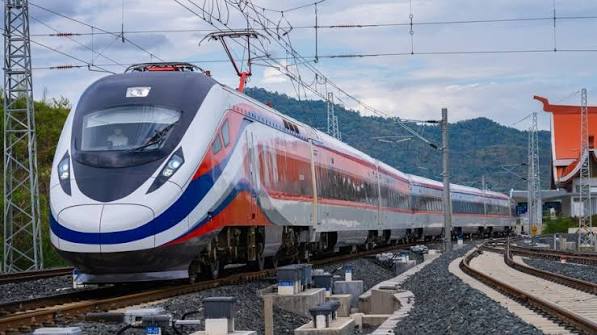
Trade and logistics links between China and Southeast Asia are expanding rapidly as new railway services, ports and multimodal transport corridors create faster routes for moving goods across the region. The developments are strengthening the connection between China’s inland manufacturing centres and ASEAN markets, while giving exporters more alternatives to traditional road and sea transportation.
A major part of this expansion is the New International Land-Sea Trade Corridor, which links China’s western and southwestern provinces with southern ports and then onward to Southeast Asia and other international markets. The corridor’s rail services handled a record 1.425 million twenty-foot equivalent units (TEUs) of cargo in 2025, an increase of 47.6% from the previous year. Its network has continued to expand, connecting inland Chinese production centres with ports and overseas destinations.
The China-Laos railway has become one of the most important pieces of this regional logistics network. In the first seven months of 2026, trade transported through the railway exceeded 20 billion yuan, or about $3 billion, with the range of goods carried through the route continuing to expand. The increase shows how quickly the railway is becoming part of normal commercial supply chains between China and mainland Southeast Asia.
The route has also expanded beyond Laos. China-Laos-Thailand freight services are allowing Chinese manufacturers to reach Thai markets by rail. In June, a shipment of about 500 tonnes of steel structures from Chongqing began its journey to Thailand through the railway corridor. The roughly 2,900-kilometre route was expected to take around four days, offering exporters an alternative to traditional road transportation.
China and Vietnam are also strengthening their freight connection. Railway services between the two countries are increasingly carrying electronics, machinery, industrial components and agricultural products. A freight train travelling from Nanning to Hanoi can complete the journey in around 14 hours, while new freight-consolidation services are helping smaller companies combine shipments and reduce transportation costs.
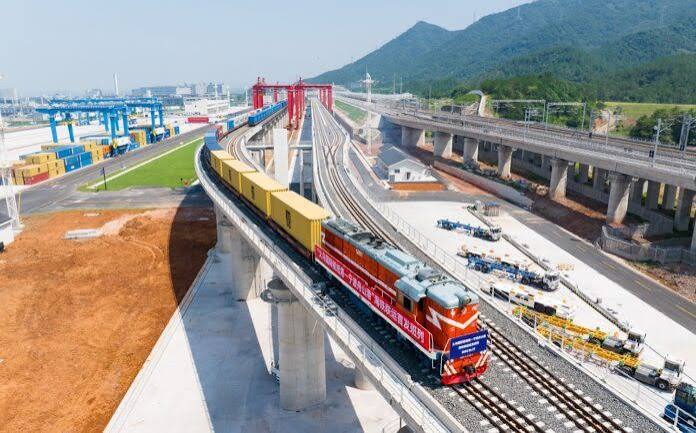
This is particularly important for small and medium-sized businesses. Large exporters can generally arrange full-container shipments, but smaller companies often struggle with logistics costs because their cargo volumes are not large enough to fill an entire container. Freight-consolidation systems allow several exporters to share transport capacity, making cross-border trade more accessible.
The expansion of rail connectivity is also taking place alongside major investment in ports and waterways. One of the most important projects is China’s Pinglu Canal in Guangxi. The 134.2-kilometre canal is scheduled to begin navigation in September and is designed to provide a more direct connection between China’s inland regions and the Beibu Gulf. The project has attracted investment of more than 70 billion yuan.
The canal is expected to reduce transportation times and logistics costs for cargo moving from western China toward Southeast Asian markets. It will also strengthen the role of Guangxi as a logistics hub because the region has both land and sea borders with ASEAN countries.
The scale of China-ASEAN trade makes these infrastructure projects particularly significant. Trade between China and ASEAN reached $1.05 trillion in 2025, crossing the $1 trillion mark for the first time. Better transport infrastructure could help businesses take advantage of this growing commercial relationship.
Manufacturing supply chains are likely to be among the biggest beneficiaries. Southeast Asia has become an increasingly important production base for electronics, automobiles, machinery, consumer goods and other industries. Faster logistics links with China can help factories receive components and raw materials more efficiently while allowing finished products to move toward regional markets.
The development also gives companies more flexibility when dealing with disruptions. Businesses that rely entirely on one shipping route can face significant problems when ports become congested or sea freight prices rise. A combination of rail, road, sea and inland-waterway connections can provide alternative routes when one part of the supply chain comes under pressure.
However, the expansion of China’s regional logistics network also has a wider strategic dimension. Better infrastructure can increase economic integration between China and ASEAN while strengthening China’s position as a major trading and manufacturing partner in Southeast Asia.
For ASEAN economies, improved connectivity can bring both opportunities and challenges. Lower logistics costs can support exports and attract manufacturing investment, but stronger access to Chinese products can also increase competitive pressure on local manufacturers.
For investors, companies involved in ports, rail freight, logistics, warehousing, shipping and industrial infrastructure could benefit from rising regional trade volumes. Manufacturers with supply chains across China and Southeast Asia may also gain from shorter and more predictable transportation routes.
The broader trend is clear: regional trade is becoming increasingly supported by interconnected transport systems rather than relying on a single mode of shipping. Railways, ports, highways and waterways are being developed as parts of one larger logistics network.
As these links continue to expand, China and ASEAN are becoming more closely connected economically. The growth of freight rail services, new port facilities and projects such as the Pinglu Canal could make it easier for goods to move between China’s inland manufacturing centres and Southeast Asian markets.
For businesses, the biggest benefit may ultimately be greater choice. More transport routes can mean lower costs, shorter delivery times and greater resilience when global supply chains face disruption.