
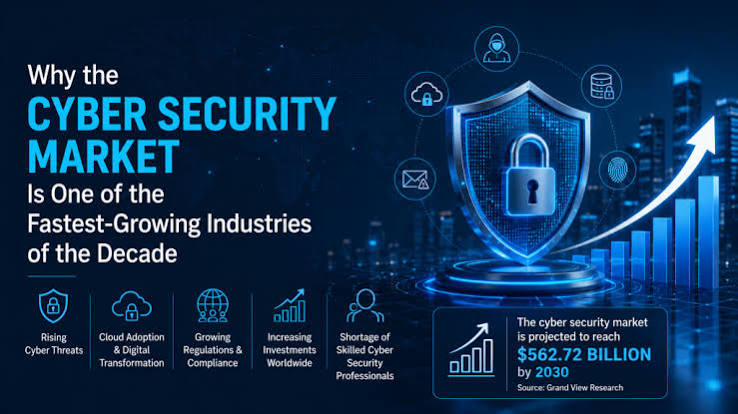
The global demand for cybersecurity software is increasing rapidly as businesses, governments and individuals face a growing number of digital threats. The rise of online services, cloud computing, artificial intelligence and connected devices has created new opportunities for growth, but it has also increased the risk of cyberattacks, data breaches and financial fraud.
Organizations across industries are investing more in cybersecurity solutions to protect sensitive information and maintain secure digital operations. Companies in sectors such as banking, healthcare, retail, manufacturing and government services are adopting advanced security tools to defend against increasingly complex cyber threats.
One of the major reasons behind the growth in cybersecurity software demand is the rising frequency of cyberattacks worldwide. Hackers are using more advanced techniques, including ransomware, phishing campaigns and malware attacks, to target organizations of all sizes. These threats can lead to financial losses, operational disruptions and damage to business reputation.

Businesses are now prioritizing cybersecurity as a key part of their technology strategy rather than treating it as only an IT requirement. Many companies are increasing their security budgets and implementing solutions such as endpoint protection, network security, identity management and threat monitoring systems.
The rapid adoption of cloud technology has also contributed to the expansion of the cybersecurity market. As businesses move their data and applications to cloud platforms, they require stronger security systems to protect information stored and processed online. Cloud security solutions are becoming an important area of investment as organizations look for flexible and reliable protection methods.
Artificial intelligence is playing a growing role in the cybersecurity industry. Security companies are using AI-powered tools to detect unusual activities, identify potential threats and respond to attacks faster. Machine learning technologies help analyze large amounts of data and improve the ability to recognize new attack patterns.
The increase in remote and hybrid work has further accelerated the need for cybersecurity software. Employees accessing company systems from different locations create additional security challenges. Organizations are adopting stronger authentication methods, secure access solutions and monitoring tools to protect business networks.
Small and medium-sized businesses are also becoming important customers in the cybersecurity market. Earlier, many smaller companies considered advanced security solutions too expensive or unnecessary. However, growing awareness about cyber risks has encouraged more businesses to invest in affordable security software and managed cybersecurity services.
Governments around the world are introducing stricter data protection rules and cybersecurity standards, which are also supporting market growth. Companies are required to improve their security practices to comply with regulations and protect customer information.
The cybersecurity industry is expected to continue expanding as digital transformation increases globally. Security providers are focusing on developing innovative solutions that can protect against emerging threats while offering easier management for users.
Despite strong growth opportunities, the cybersecurity sector faces challenges, including a shortage of skilled security professionals and the constantly changing nature of cyber threats. Attackers continue to develop new methods, requiring companies to regularly update their security systems and strategies.
Industry experts believe that cybersecurity will remain a major priority for organizations in the coming years. As businesses become more dependent on digital technology, protecting data and online infrastructure will become essential for maintaining trust and stability.
The growing demand for cybersecurity software reflects a broader shift in how organizations approach digital safety. Companies are no longer waiting for attacks to happen before improving security. Instead, they are investing proactively in advanced tools and technologies to reduce risks and build stronger protection against future cyber threats.