
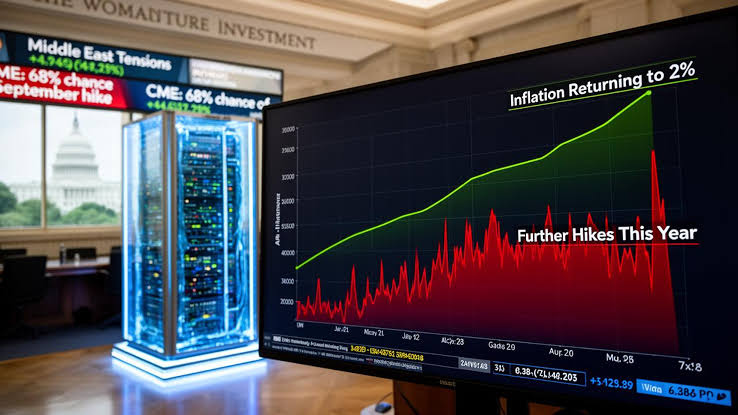
Global financial markets continue to remain on edge as investors closely monitor three major factors shaping the investment landscape—inflation trends, expectations around interest rates, and rising geopolitical tensions in the Middle East. These developments have become key drivers of market sentiment, influencing stock markets, bond yields, commodity prices, and currency movements across the world.
While several major economies have shown signs of resilience, uncertainty surrounding inflation and monetary policy continues to keep investors cautious. At the same time, ongoing tensions in the Middle East have raised concerns over global energy supplies and trade routes, adding another layer of risk to financial markets.
Market participants are carefully evaluating every new economic report and policy statement in an attempt to understand the direction of the global economy during the coming months.
Inflation remains one of the biggest concerns for investors. Although price pressures have eased compared to the highs seen in previous years, inflation in many economies is still above the target levels set by central banks. Rising prices for services, housing, and certain consumer goods continue to influence inflation data, making policymakers cautious about their next steps.
Investors are paying close attention to inflation reports because they directly influence interest rate decisions. If inflation remains higher than expected, central banks may choose to keep interest rates elevated for a longer period. On the other hand, signs of sustained moderation in inflation could open the door for future rate cuts, which would generally support economic growth and financial markets.
Interest rate expectations continue to play a major role in global investment decisions. Central banks, including the US Federal Reserve, the European Central Bank, and the Bank of England, are balancing the need to control inflation while supporting economic growth.

Higher interest rates generally increase borrowing costs for businesses and consumers, which can slow economic activity. At the same time, they often strengthen fixed-income investments while creating pressure on equity markets. Investors therefore closely monitor speeches from central bank officials and economic indicators for clues about future monetary policy.
Any change in interest rate expectations can quickly influence stock markets, government bond yields, foreign exchange markets, and investment flows across different regions.
Alongside economic concerns, geopolitical developments in the Middle East remain another major source of uncertainty. The region plays a critical role in global energy production, and any escalation in tensions has the potential to disrupt oil supplies and international shipping routes.
Higher crude oil prices can increase transportation and manufacturing costs worldwide, contributing to inflationary pressures. Businesses and investors therefore continue to monitor geopolitical developments closely, as prolonged instability could affect global economic growth and financial market performance.
Commodity markets have already shown increased sensitivity to developments in the region, with energy prices reacting to news related to regional security and supply concerns.
Despite these global challenges, several economies continue to demonstrate resilience through steady employment, healthy consumer spending, and ongoing investments in technology and infrastructure. Corporate earnings in many sectors have also remained relatively stable, providing some support to equity markets.
Investors are increasingly adopting a balanced investment strategy by diversifying portfolios across equities, bonds, commodities, and alternative assets. This approach helps reduce risk while allowing investors to take advantage of opportunities that may emerge as market conditions evolve.
Emerging markets, including India, continue to attract investor interest due to their strong economic growth potential, expanding consumer markets, and ongoing infrastructure development. However, foreign investment flows remain sensitive to global interest rate movements and geopolitical events.
Market analysts believe volatility may continue in the near term as investors react to fresh economic data and international developments. Inflation figures, employment reports, central bank meetings, corporate earnings, and geopolitical headlines are expected to remain the primary factors influencing global financial markets.
Experts also emphasize that while short-term market fluctuations are inevitable, long-term investment decisions should continue to be guided by economic fundamentals rather than temporary uncertainty. Companies with strong balance sheets, stable earnings, and sustainable growth strategies are likely to remain attractive even during periods of heightened volatility.
As the global economy navigates multiple challenges simultaneously, investors are expected to remain cautious but optimistic. The direction of inflation, future interest rate decisions, and geopolitical stability will largely determine the outlook for financial markets in the months ahead.