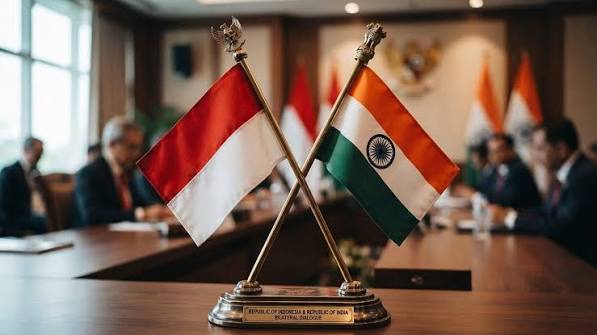
India and Indonesia have discussed ways to strengthen financial cooperation, including greater use of their local currencies for bilateral trade and the possibility of establishing financial centres in their respective countries. The discussions took place during a meeting between Union Finance Minister Nirmala Sitharaman and Indonesia’s Vice Minister of Finance Juda Agung on the sidelines of BRICS-related meetings in India on August 13, 2026.
The talks are important because both countries are looking for ways to make cross-border trade and payments more efficient. At present, international transactions often involve the US dollar or another major global currency, which can add conversion costs and expose businesses to fluctuations in exchange rates. Local-currency transactions can potentially reduce some of these costs by allowing exporters and importers to settle payments directly in their own currencies.
India and Indonesia have already been working toward greater use of their national currencies in bilateral transactions. The Reserve Bank of India and Bank Indonesia signed an agreement in March 2024 to promote local-currency transactions between the two countries. The arrangement was designed to make cross-border payments more efficient and deepen financial and economic links.
Under such an arrangement, an Indian importer could potentially make a payment in rupees while an Indonesian exporter receives Indonesian rupiah, with participating banks handling the settlement mechanism. This can reduce the need for businesses to first convert their money into US dollars before completing a transaction.
For companies involved in India-Indonesia trade, the system could be particularly useful if adoption increases. Lower transaction costs and faster settlement can make international trade easier for businesses, especially smaller companies that may have fewer resources to manage foreign-exchange risks.
The two sides also discussed cooperation in the financial-services sector and the development of financial centres. Financial centres can bring together banks, investment firms, insurance companies, asset managers and other financial institutions, creating an ecosystem for investment and international transactions. Strong financial centres can also help countries attract foreign capital and develop sophisticated financial services.

The discussion comes as India is preparing to host the 18th BRICS Summit in New Delhi in September 2026. India is using its BRICS presidency to place greater emphasis on economic cooperation, financial connectivity, development and practical mechanisms that can improve trade between member countries.
Local-currency settlement is becoming a broader topic within BRICS. Several member countries have been exploring ways to increase the use of national currencies in bilateral trade and make cross-border payments faster and cheaper. The objective is not necessarily to create a common BRICS currency. Instead, countries are looking at practical systems that allow businesses to conduct more transactions without relying entirely on a third currency.
For India, this approach is also connected with the Reserve Bank of India’s efforts to increase the international use of the rupee. RBI Governor Sanjay Malhotra recently said the central bank is working to make cross-border payments easier and cheaper while encouraging greater use of the rupee with trading partners.
However, moving toward local-currency trade is not without challenges. Businesses need enough demand for both currencies, banks need suitable settlement arrangements and companies may still face exchange-rate risks. If an Indian company receives Indonesian rupiah or an Indonesian company receives Indian rupees, there must be efficient ways to use, convert or invest those funds.
Financial institutions will therefore play an important role. Banks in both countries need to develop payment channels, settlement systems and foreign-exchange products that make local-currency transactions practical for businesses. Earlier discussions between Indian and Indonesian financial institutions have also highlighted the need for technical guidelines, pilot projects, simplified documentation and tools for managing currency risks.
The initiative could also strengthen trade ties between two of Asia’s large emerging economies. India and Indonesia have significant commercial links across sectors including energy, commodities, manufacturing, pharmaceuticals, infrastructure and consumer goods. Easier payment mechanisms could encourage more companies to explore opportunities in each other’s markets.
For India, stronger financial cooperation with Indonesia also fits into a wider strategy of deepening economic relationships across Asia and the Global South. Indonesia’s role within BRICS gives the two countries another platform for discussing financial and trade cooperation.
The discussions are therefore significant beyond the immediate meeting. If local-currency settlement becomes more widely adopted, it could gradually reduce transaction costs for businesses and provide greater flexibility in cross-border trade.
At the same time, the development should not be interpreted as an immediate replacement for the US dollar in international trade. The dollar remains deeply embedded in global finance, and local-currency systems still need to overcome practical issues involving liquidity, currency risk and international acceptance.
For India and Indonesia, the immediate goal is more practical: make bilateral payments easier, strengthen financial-sector cooperation and create more opportunities for businesses to trade and invest. If these initiatives continue to develop, they could become an important part of the wider push toward stronger regional financial connectivity and more diversified international payment systems.