

India’s telecom industry is entering a new phase of technological transformation, with major telecom operators and the government intensifying efforts to prepare the country for the next generation of digital connectivity. While 5G services continue to expand across cities and towns, the focus is gradually shifting toward 6G research, artificial intelligence (AI)-powered network management, and advanced digital infrastructure that can support future technologies.
Over the past year, telecom companies have significantly expanded their 5G coverage, allowing millions of users to experience faster internet speeds, lower latency, and improved network reliability. These advancements have benefited consumers, businesses, educational institutions, and healthcare providers by enabling smoother video streaming, cloud computing, online learning, and digital healthcare services.
Industry experts believe the next stage of growth will come from integrating artificial intelligence into telecom networks. AI-powered systems can monitor network traffic in real time, identify technical issues before they affect customers, optimize bandwidth usage, and improve overall service quality. Telecom operators are investing in intelligent network management tools that can automatically detect faults, reduce downtime, and enhance customer experience without requiring extensive manual intervention.
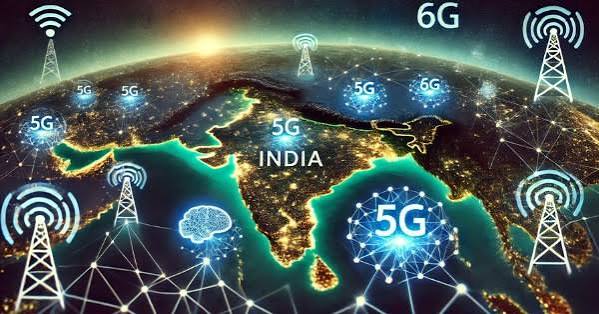
The government is also encouraging research and innovation in 6G technology. Although commercial 6G services are still several years away, India aims to become one of the leading contributors to global 6G standards. Research institutions, technology companies, and telecom equipment manufacturers are collaborating on projects related to high-speed wireless communication, satellite connectivity, and next-generation network architecture.
Another important area of development is the expansion of fiber-optic infrastructure. Telecom companies are increasing investments in fiber networks to improve internet connectivity in both urban and rural areas. A stronger fiber backbone is essential for supporting high-speed broadband, 5G towers, cloud computing services, and future 6G deployments. Better connectivity is expected to boost digital inclusion and support India’s growing digital economy.
Private enterprises are also adopting advanced telecom solutions for smart factories, logistics, manufacturing, and automation. With reliable high-speed connectivity, industries can deploy Internet of Things (IoT) devices, robotics, and real-time monitoring systems to improve productivity and operational efficiency.

Cybersecurity remains a key priority as telecom networks become more advanced. Service providers are strengthening their security infrastructure to protect customer data, prevent cyberattacks, and ensure secure digital communication. AI-based threat detection systems are increasingly being used to identify suspicious activities and respond to security incidents more quickly.
Consumers are expected to benefit from these technological advancements through faster internet speeds, improved call quality, reduced network congestion, and enhanced digital services. Businesses, meanwhile, will gain access to more reliable connectivity that supports cloud applications, remote work, digital payments, and emerging technologies such as augmented reality and autonomous systems.
Experts believe that India’s telecom sector is moving beyond simply expanding mobile coverage. The industry’s focus is now on building an intelligent, secure, and future-ready communication ecosystem capable of supporting the country’s long-term digital ambitions. As investments continue in AI, fiber networks, and next-generation wireless technologies, the telecom sector is expected to play an even greater role in driving economic growth, innovation, and digital transformation across the nation.