

India’s electric vehicle (EV) industry has achieved another significant milestone. For the first time, electric vehicles accounted for more than 12% of the country’s total vehicle retail sales in June 2026, marking a major shift in consumer preference toward cleaner mobility solutions. The growth was largely driven by strong demand for electric two-wheelers, while passenger EVs and commercial electric vehicles also recorded healthy sales.
The steady expansion of charging infrastructure, government incentives, lower running costs, and the launch of new EV models have encouraged more customers to consider electric mobility. Rising fuel prices over recent years have also made electric vehicles a more attractive option for daily commuting.
Industry leaders believe this achievement reflects the rapid transformation taking place in India’s automobile sector. Manufacturers are investing heavily in battery technology, software, connected features, and localized production to make EVs more affordable and practical for Indian buyers.
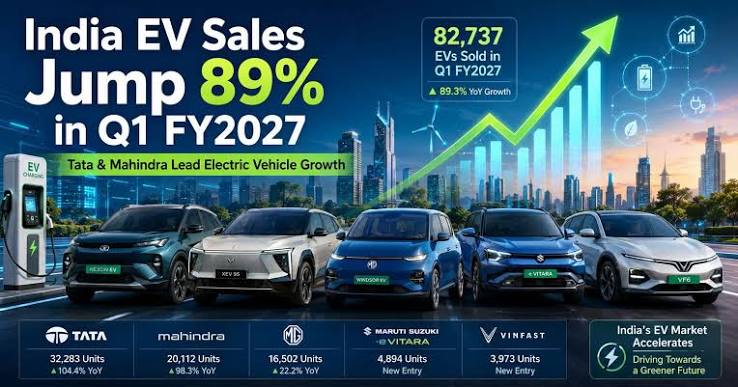
Experts point out that electric two-wheelers continue to lead the transition because they are comparatively affordable and ideal for city travel. At the same time, passenger electric cars are also witnessing steady demand as buyers become more confident about charging availability and battery performance.
The government has continued to support the EV ecosystem through various policy initiatives, while automobile companies are expanding dealership networks and charging partnerships across the country. These efforts are expected to accelerate adoption further in the coming years.
With electric mobility now accounting for a record share of total vehicle sales, India’s automobile industry is entering a new phase where sustainable transportation is becoming mainstream rather than remaining a niche segment. Analysts believe this momentum will continue as technology improves, production costs decline, and consumer awareness grows.