
Infrastructure development and business expansion continue to remain at the center of economic growth as companies across multiple industries increase investments to meet rising demand and strengthen their market presence. From transportation and manufacturing to energy, telecommunications, and logistics, businesses are focusing on long-term expansion strategies that support operational efficiency, create employment opportunities, and improve competitiveness. These developments are attracting strong attention from investors, policymakers, and industry experts who view infrastructure investment as a key driver of sustainable growth.
In recent months, companies have accelerated capital expenditure plans to expand production capacity, modernize facilities, and improve supply chain networks. Businesses recognize that investing in infrastructure today can help them meet future demand while reducing operating costs and increasing productivity. Expansion projects are no longer limited to building new factories or offices; they now include digital infrastructure, automation, research centers, warehousing, and advanced manufacturing facilities.
The manufacturing sector has emerged as one of the largest contributors to infrastructure investment. Companies are setting up new production units, upgrading existing plants, and adopting modern technologies to improve efficiency. Increasing domestic demand, export opportunities, and supportive government policies have encouraged businesses to invest in long-term industrial growth. Expansion of manufacturing capacity also helps strengthen supply chains and reduce dependence on imports in several industries.
Transportation and logistics infrastructure continues to receive significant investment as businesses seek faster and more efficient movement of goods. Companies are expanding warehousing facilities, distribution centers, and transportation networks to improve delivery times and reduce operational costs. Growth in e-commerce and organized retail has further increased the need for modern logistics infrastructure capable of handling larger volumes of goods across regional and international markets.
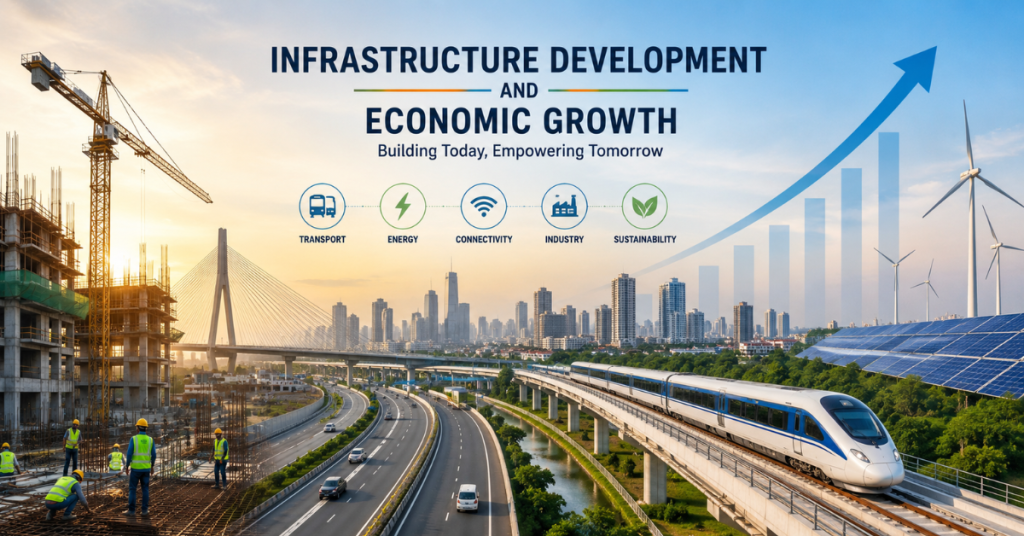
The energy sector remains another major focus for infrastructure expansion. Companies are investing in power generation, renewable energy projects, electricity transmission networks, and energy storage systems. Solar parks, wind farms, battery storage facilities, and green hydrogen initiatives continue to attract both public and private investment. These projects are expected to improve energy security while supporting long-term sustainability goals.
Telecommunications companies are also expanding digital infrastructure to meet rising demand for high-speed connectivity. Investments in fiber-optic networks, advanced mobile services, cloud infrastructure, and data centers are helping businesses support digital transformation across industries. Reliable communication networks have become essential for sectors such as healthcare, education, financial services, manufacturing, and e-commerce, making telecom infrastructure a critical component of economic development.
The real estate and commercial infrastructure segment has witnessed renewed activity as businesses establish new offices, technology parks, industrial zones, and mixed-use developments. Companies continue to invest in modern workspaces designed to support collaboration, innovation, and flexible working models. Commercial expansion is also creating opportunities for construction companies, engineering firms, and infrastructure service providers.
Technology is playing an increasingly important role in infrastructure development. Artificial intelligence, automation, Internet of Things (IoT), digital monitoring systems, and predictive maintenance solutions are helping businesses manage large-scale infrastructure projects more efficiently. Smart infrastructure improves operational performance, reduces maintenance costs, and enhances long-term asset utilization, making these investments increasingly attractive for companies across sectors.
Financial institutions continue to support expansion plans by providing long-term funding for infrastructure projects. Banks and investment firms remain optimistic about sectors that demonstrate stable demand and sustainable growth potential. Investors generally favor businesses that balance ambitious expansion strategies with disciplined financial management and efficient capital allocation. Companies with healthy balance sheets and clear execution plans are more likely to attract long-term investment.
Government initiatives also continue to encourage infrastructure development through policy support, public-private partnerships, and investment incentives. Large-scale projects in transportation, renewable energy, industrial corridors, urban development, and digital infrastructure are expected to stimulate private sector participation while strengthening the overall business environment. These initiatives create opportunities for companies involved in engineering, construction, materials, technology, and project management.
Despite the positive outlook, businesses remain mindful of challenges such as rising construction costs, regulatory approvals, financing requirements, and global economic uncertainty. Effective project execution, efficient resource management, and timely completion remain essential for ensuring that expansion plans deliver the expected financial returns. Companies that successfully manage these challenges are likely to strengthen their competitive position in the years ahead.
Looking forward, infrastructure development and expansion plans are expected to remain key drivers of economic growth and corporate performance. Businesses that continue investing in modern facilities, digital capabilities, sustainable energy, and efficient logistics will be better positioned to meet future market demand. As industries evolve and customer expectations continue to change, strategic infrastructure investment will remain essential for long-term success and business resilience.
Overall, recent infrastructure and expansion developments highlight growing confidence in the economy and the long-term growth potential of multiple industries. Continued investment in physical and digital infrastructure is expected to improve productivity, support innovation, generate employment, and create new opportunities for businesses and investors alike.