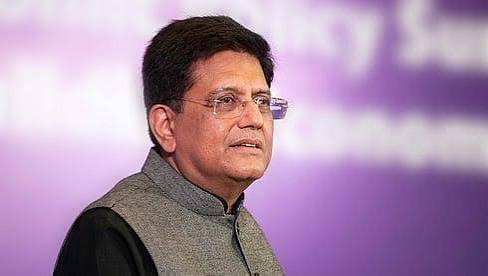
Union Commerce and Industry Minister Piyush Goyal has called on Indian businesses and entrepreneurs to take the idea of “Make in India” beyond the domestic market and build brands that can compete successfully around the world. Speaking at the inaugural Bharatiya Vyapar Mahotsav 2026 in New Delhi, Goyal said Indian companies need to focus not only on producing goods in the country but also on creating products and services that can win international customers.
The minister’s message comes as India looks to strengthen its position in global trade and expand exports. According to recent government figures, India’s exports have grown by around 15% during the first four months of the current financial year, while the government is working towards a long-term target of reaching $1 trillion in exports.
Goyal stressed that Indian businesses need to think globally when developing their products. The idea is to move from simply manufacturing products for Indian consumers to building companies and brands that are recognised in international markets. For entrepreneurs, this means paying greater attention to product quality, design, pricing, packaging, customer service and global standards.
The minister also highlighted the importance of fair trading practices. He urged businesses and citizens to conduct trade responsibly and follow transparent business practices as India expands its international economic relationships. Fair competition, according to the government’s approach, can help Indian companies build credibility with customers and business partners in other countries.
Another area highlighted by Goyal was the need for greater emphasis on recycling, reuse and the circular economy. As Indian companies expand into global markets, environmental standards are becoming increasingly important. International buyers and regulators are paying more attention to how products are manufactured, what materials are used and what happens to those products at the end of their useful life.
For Indian manufacturers, this could become an important competitive factor. Companies that adopt sustainable production methods and reduce waste may find it easier to meet environmental requirements in overseas markets. It could also help Indian brands position themselves as responsible global suppliers rather than competing only on price.
Goyal linked this export ambition with India’s long-term economic goals. He has spoken about India’s vision of becoming a $30 trillion economy by 2047, arguing that stronger international trade relationships and greater global market access will be important for achieving that target.
Small businesses and MSMEs are expected to play a major role in this strategy. Many Indian businesses already produce products with potential demand outside the country, but smaller companies often lack the resources, market knowledge and distribution networks needed to enter foreign markets. Government-backed trade events, export support and access to international buyers can help bridge some of these gaps.
Free Trade Agreements are another important part of the government’s strategy. Goyal has encouraged Indian businesses, particularly MSMEs, to make better use of the market access created through trade agreements. Such agreements can reduce tariffs and make it easier for Indian products to compete in overseas markets, although companies still need to meet local regulations and quality standards.
The shift from “Made in India” to globally recognised Indian brands is also important because exports are not limited to physical goods. Indian companies are increasingly selling technology services, digital products, engineering solutions, professional services and intellectual property to international customers. This creates opportunities for entrepreneurs across manufacturing as well as technology and services.
Goyal’s comments also reflect a broader change in India’s approach to manufacturing. The country has been trying to move higher up global supply chains by encouraging domestic production, attracting investment and developing stronger capabilities in sectors such as electronics, automobiles, pharmaceuticals, renewable energy and advanced technology.
For entrepreneurs, however, competing globally will require more than government support. Companies need to invest in research and development, improve productivity and maintain consistent quality. They also need to understand foreign customers and adapt products to different markets rather than assuming that a successful product in India will automatically succeed overseas.
Building international brands can also create jobs and generate additional economic activity within India. When companies expand their exports, demand can increase for factories, logistics, packaging, technology, marketing and skilled workers. Successful global brands can also encourage suppliers and smaller businesses in their ecosystem to become exporters themselves.
The government’s message therefore goes beyond simply increasing the number of products shipped overseas. The larger objective is to create Indian companies that can compete on quality, innovation, reliability and brand value.
Goyal’s call for taking “Make in India” from local to global comes at a time when international supply chains are being reshaped and companies worldwide are looking for new manufacturing and sourcing destinations. India has an opportunity to capture a larger share of this trade, but Indian businesses will need to prove themselves in highly competitive global markets.
For India’s entrepreneurs, the message is clear: manufacturing for the Indian market is only one part of the opportunity. The bigger ambition is to create products, services and brands in India that customers across the world are willing to buy.