
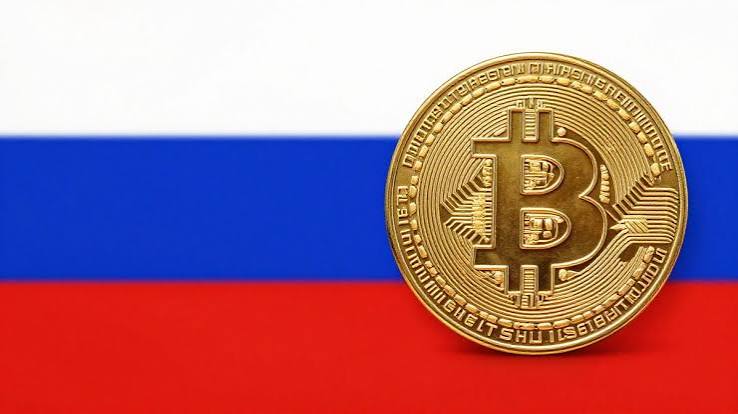
Russia is taking another major step toward bringing cryptocurrency trading under a regulated financial framework. The Bank of Russia has identified Bitcoin, Ethereum and Tether’s USDT as the digital assets that could be made available for public trading through licensed Russian exchanges under the country’s new cryptocurrency rules. The development marks a significant change in Russia’s approach to digital assets, although the framework is designed to keep retail participation tightly controlled.
The move comes shortly after Russia adopted its first comprehensive legal framework for digital currencies. The new legislation is scheduled to take effect on September 1, 2026, establishing rules for cryptocurrency trading, market participants and the treatment of digital assets. The framework is intended to bring existing crypto activity into a more closely supervised financial system rather than allowing the market to operate largely outside traditional regulation.
Bitcoin, Ethereum and USDT have been selected because they meet the regulator’s proposed requirements relating to factors such as market size, liquidity, trading activity and the length of their trading history. This means that most of the thousands of other cryptocurrencies available internationally are unlikely to receive the same access for ordinary Russian investors.
However, the announcement should not be interpreted as unrestricted crypto access for everyone. Non-qualified or ordinary investors will face an annual purchase limit of around 300,000 rubles per licensed intermediary, equivalent to roughly $3,600–$3,700 at recent exchange rates. Qualified investors would face fewer restrictions and would be able to trade the approved assets without the same retail purchase ceiling.

Investors will also have to complete a risk assessment before being allowed to participate. The system is designed to ensure that people understand the potential risks associated with highly volatile digital assets before making purchases.
The inclusion of USDT, the dollar-pegged stablecoin issued by Tether, is particularly noteworthy. Unlike Bitcoin and Ethereum, USDT is designed to maintain a value close to the US dollar. Stablecoins are widely used in the global cryptocurrency market for trading, transfers and liquidity management.
Russia’s decision could therefore have implications beyond traditional cryptocurrency speculation. USDT is already widely used across international digital-asset markets, and allowing regulated trading could provide Russian investors with a more formal route to access one of the world’s most heavily traded stablecoins.
At the same time, the new framework does not make cryptocurrency a replacement for the Russian ruble in everyday domestic payments. Russia continues to restrict the use of digital currencies as ordinary domestic payment instruments. The new rules are primarily focused on regulated investment and trading activity.
The development is also important because Russia has been debating cryptocurrency regulation for several years. The Finance Ministry has generally supported bringing digital assets into a formal legal structure, while the Bank of Russia has historically taken a more cautious approach because of concerns about financial stability, money laundering and risks to inexperienced investors.
The new framework represents something of a compromise between those positions. Rather than banning cryptocurrency completely, Russia is creating a controlled market in which trading is carried out through licensed financial infrastructure.
Licensed exchanges and other regulated intermediaries will therefore play a central role. Earlier proposals indicated that cryptocurrency trading would be conducted through existing licensed market participants rather than through a completely separate system of unregulated crypto exchanges.
For the global cryptocurrency market, Russia’s decision is significant because the country has a large population of existing crypto users. Earlier Bank of Russia research showed substantial Russian exposure to Bitcoin, Ethereum and stablecoins, suggesting that the new rules are partly an attempt to bring existing activity into a more transparent regulatory environment.
The announcement could also influence how other countries approach cryptocurrency regulation. Governments around the world are increasingly trying to find a middle ground between allowing digital-asset innovation and protecting investors from fraud, extreme volatility and financial crime.
For cryptocurrency companies, regulated access can provide greater legitimacy, but it also brings additional compliance responsibilities. Exchanges and intermediaries will have to meet licensing requirements, conduct appropriate customer checks and follow rules designed to prevent misuse of digital assets.
For Russian retail investors, the changes provide a legal and regulated route to trade major cryptocurrencies, but the restrictions mean the market will be very different from the largely unrestricted global crypto ecosystem.
The most important point is that Russia is not simply opening its cryptocurrency market without conditions. Instead, it is creating a controlled system centred on a small number of major digital assets, with Bitcoin, Ethereum and USDT at the centre of the proposed retail market.
The new rules are expected to become an important test of whether Russia can integrate cryptocurrency into its financial system while maintaining control over risks. If the regulated model works, it could encourage further development of digital-asset infrastructure and potentially lead to broader participation in the future.
For now, the decision represents a major shift in Russia’s cryptocurrency policy. Bitcoin, Ethereum and USDT are moving closer to becoming officially recognised investment instruments for ordinary Russian investors, but access will remain subject to strict limits, testing and regulatory oversight.