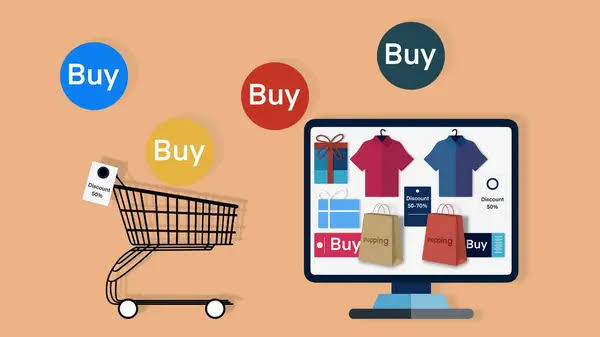
Small businesses across India are increasingly turning to e-commerce, social media, digital payments and online marketplaces to reach customers outside their traditional local markets. What was once an option mainly used by large retailers is gradually becoming an important growth channel for small manufacturers, traders, artisans, home-based businesses and service providers.
The shift is being supported by wider internet access, smartphone usage, digital payments and the growing number of consumers who discover products online before making a purchase. India’s e-commerce market is expected to continue expanding rapidly, creating more opportunities for smaller businesses to sell beyond the cities and towns where they are physically located.
For a small business, the biggest advantage of going online is the ability to reach customers without opening a physical shop in every location. A manufacturer in Jaipur, for example, can potentially sell products to customers in Delhi, Mumbai, Bengaluru or even overseas through digital channels. This can significantly expand the potential customer base.
Social media has also changed the way small businesses promote themselves. Instagram, Facebook, YouTube and other platforms allow entrepreneurs to display products, explain their services and communicate directly with customers. Many small brands are now using short videos, product demonstrations and customer reviews instead of depending entirely on traditional advertising.
Online marketplaces provide another route to growth. Businesses can list their products on established e-commerce platforms and gain access to customers who may never have discovered them through traditional retail channels. This can be particularly valuable for niche products, regional brands and specialised manufacturing businesses.

Government-backed digital commerce initiatives are also playing a role. The Open Network for Digital Commerce (ONDC) is designed to help businesses participate in e-commerce through an open network rather than depending entirely on a single platform. ONDC says its network is intended to help businesses grow online and compete with larger players.
The scale of participation is already significant. Government data showed that around 206,000 merchants had completed at least one transaction on the ONDC Network by December 31, 2025. The government also reported that thousands of MSMEs were generating transactions through the MSME TEAM initiative.
Digital commerce can be particularly useful for businesses from smaller towns. Traditionally, a local entrepreneur might have depended on customers within a limited geographic area. Online selling changes that equation by allowing the business to showcase products to a much larger audience.
This is also creating opportunities for traditional Indian products. Handicrafts, textiles, food products, jewellery, furniture and regional specialties can find customers outside their original markets when businesses combine good product presentation with reliable delivery and online marketing.
Recent policy changes are expected to provide additional opportunities. The government has amended foreign direct investment rules related to e-commerce with the stated aim of helping small businesses, artisans, farmers and fishermen access larger markets, including opportunities connected with international commerce.
Export opportunities are particularly important. Changes announced in the 2026 Budget, including an increase in the courier export limit, were designed to make it easier for MSMEs and small producers to participate in cross-border e-commerce. Such measures can reduce some of the logistical barriers faced by smaller exporters.
However, moving online does not automatically guarantee success. Small businesses have to deal with competition, advertising costs, platform fees, returns, packaging, logistics and customer-service requirements. A product that sells well in a local market may also require different pricing or presentation when marketed nationally.
Digital visibility is another challenge. Thousands of businesses can sell similar products online, making it difficult for a new seller to stand out. Good photography, clear product descriptions, customer reviews and consistent communication have therefore become important parts of online business.
Cash-flow management is equally important. Selling through an online platform can increase orders, but businesses must have enough working capital to purchase inventory, manage packaging and fulfil orders. Returns and delayed payments can also put pressure on smaller companies.
Despite these challenges, the overall direction is clear. Digital platforms are reducing some of the traditional barriers between small businesses and customers. Instead of being limited by geography, entrepreneurs can increasingly compete based on product quality, price, service and brand reputation.
The development is also changing India’s wider retail ecosystem. Small businesses are no longer only suppliers to large retailers; many are becoming direct-to-consumer brands themselves. Digital channels allow them to collect customer feedback, understand buying patterns and build relationships directly with consumers.
For India’s MSME sector, this could become an important source of future growth. Small businesses contribute significantly to employment and economic activity, and better access to markets can help them increase production and create additional jobs.
The next stage could involve greater use of digital tools for inventory management, online advertising, customer support, payments and logistics. Artificial intelligence and automation may also make some of these tools more affordable for smaller companies.
Ultimately, e-commerce is giving small businesses something they traditionally struggled to obtain: access to a much larger market without having to build a large physical retail network.
As India’s digital economy continues to expand, more small businesses are likely to combine traditional local operations with online sales. For many entrepreneurs, the future may not be about choosing between offline and online business, but using both together to reach customers wherever they are.