
New transparency requirements under the European Union’s AI Act have officially started applying, bringing stricter rules for companies that develop or deploy artificial intelligence systems and generate synthetic content. The rules took effect on August 2, 2026, and are designed to make it easier for people to understand when they are interacting with AI or viewing content that has been created or significantly altered by AI.
The changes are part of the EU’s wider effort to reduce deception, manipulation and confusion caused by increasingly realistic AI-generated material. As image generators, video tools, voice-cloning systems and chatbots become more capable, it is becoming harder for ordinary users to distinguish between content created by a person and content produced by a machine.
Under Article 50 of the EU AI Act, providers of certain AI systems must design them so that people are informed when they are directly interacting with an AI system. This is particularly relevant to chatbots and other interactive AI services that can communicate in a way that feels similar to a conversation with a human.
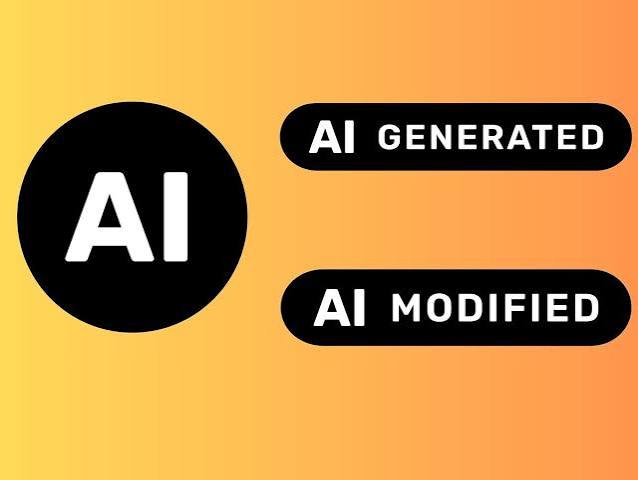
The rules also introduce requirements around AI-generated and manipulated content. AI providers are expected to use machine-readable markings that can help identify synthetic or manipulated material. The aim is not necessarily to place a large visible warning across every piece of AI content, but to make the origin of that content technically detectable.
Deepfakes are another major focus. AI-generated or manipulated images, videos and other media can now appear extremely realistic, creating risks around impersonation, misinformation and fraud. Under the new framework, certain AI-generated or manipulated content must be clearly labelled so that people are not misled about its origin.
There are also specific requirements for AI-generated text dealing with matters of public interest when it is published without appropriate human review or editorial control. This could have implications for organisations producing news-related material, public communications and other information that can influence public opinion.
The European Commission has published guidelines and a Code of Practice to help businesses understand how to meet the new requirements. The Code of Practice provides practical approaches for marking and labelling AI-generated content, although signing the code itself is voluntary. Companies that do not follow the code still have to meet the legal obligations and may need to demonstrate that their alternative methods provide an equivalent level of compliance.
The rules are already influencing major AI companies. Anthropic, for example, has announced plans to use invisible, machine-readable watermarks and metadata for content generated by its Claude models. The company says the approach is intended to help identify AI-generated material while keeping the markings largely invisible to ordinary users.
Not every piece of AI-generated content created in the past needs to be labelled retroactively. The European Commission says content generated before August 2, 2026, does not have to be labelled under these requirements. Existing AI systems placed on the market before that date also have a limited transition period for certain marking and detection obligations, running until December 2, 2026.
The financial consequences of ignoring the rules can also be significant. Depending on the circumstances, violations of the transparency requirements can result in fines of up to €15 million or 3% of a company’s total worldwide annual turnover, with proportionality taken into account for smaller businesses.
For technology companies, the new rules mean that transparency now has to be considered during the design and development of AI systems rather than treated as an optional feature. Companies may need to update their products, content-generation systems, metadata practices and user interfaces to ensure that AI involvement can be identified where required.
For users, the changes could gradually make the online environment easier to navigate. People may have more information about whether a chatbot is AI-powered or whether an image, video or piece of public-interest content has been generated or manipulated by AI.
However, transparency technology is not a perfect solution. Digital markings and metadata can sometimes be removed or lost when content is edited, uploaded to another platform or processed through different systems. That means regulation will need to work alongside media literacy, cybersecurity and responsible use of AI.
The EU’s new rules mark an important shift in the global AI industry. Instead of allowing AI-generated content to spread without clear identification, regulators are increasingly pushing technology companies to build transparency directly into their products. As AI-generated images, videos, audio and text become more common, the ability to know where digital content came from is likely to become an increasingly important part of online trust.