

European stock markets remained close to record levels on Monday as investors balanced a strong corporate earnings season against geopolitical uncertainty and the possibility of changes in global interest rates.
The pan-European STOXX 600 index was holding around 660 points in early trading after closing at a record 660.25 on Friday. The benchmark had gained about 1.7% during the previous week, extending its winning run as investors responded positively to corporate earnings and weaker-than-expected U.S. employment data.
Corporate earnings have been one of the biggest supports for European equities. The latest LSEG estimates indicate that second-quarter earnings for companies in the STOXX 600 are expected to rise by nearly 21%, significantly higher than the roughly 12.5% growth expected earlier in the earnings season. The improvement has helped investors become more confident about the underlying strength of European companies.
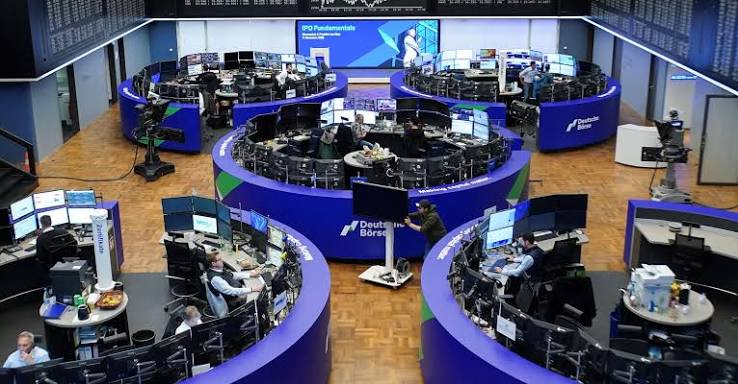
However, not every company has benefited from the positive market mood. Some shares have fallen sharply after disappointing guidance or investor concerns about valuations. This is an important feature of the current European market: investors are becoming increasingly selective.
The strong rise in European stocks has pushed valuations higher, meaning companies may need to deliver solid earnings to justify current prices. Analysts have warned that markets now have less room for disappointing results. A company that misses expectations or reduces its profit outlook can face a significant reaction even when its underlying business remains profitable.
Interest-rate expectations are another major factor. Weaker-than-expected U.S. employment data has reduced expectations of further monetary tightening and increased speculation about the Federal Reserve’s future policy direction. Lower borrowing-cost expectations can support stock markets because they reduce financing pressures and can make equities more attractive compared with bonds.
European investors are also watching upcoming economic data closely. Euro-zone employment figures and U.S. consumer-price data are due this week and could influence expectations about interest rates on both sides of the Atlantic. A softer U.S. inflation reading could strengthen expectations for easier monetary policy, while unexpectedly strong inflation could have the opposite effect.
Geopolitical risks remain another source of uncertainty. The situation around the Strait of Hormuz continues to influence oil prices and investor sentiment. Iran has indicated progress toward an agreement with Oman over new shipping lanes but has also said that the waterway’s full reopening depends on other conditions being met by the United States. Shipping through the strategic route remains limited.
Higher oil prices could create a challenge for European companies and consumers because energy costs can feed into inflation and production expenses. On Monday, Brent crude was trading close to $84 a barrel, while Europe’s energy stocks gained as oil prices remained elevated.
For now, European markets appear comfortable with the combination of strong earnings and hopes for more supportive monetary policy. But investors are becoming more cautious as share prices reach record levels.
The coming days could therefore be important. Corporate earnings, U.S. inflation, European economic data, oil prices and developments around the Strait of Hormuz could all influence whether European stocks can extend their record-setting rally.
For investors, the message from the market is increasingly clear: strong earnings are supporting the rally, but at elevated valuations, companies may need to continue delivering results that meet or exceed expectations to keep the momentum going.