
India’s economic data is under close watch this week as investors, policymakers and businesses look for clearer signs about the direction of growth, inflation and consumer demand. The July Consumer Price Index (CPI) inflation data is scheduled for release on August 12, while the latest industrial production figures are already pointing to a stronger manufacturing environment. Together, these indicators are expected to provide an important picture of how the Indian economy is performing in the opening months of the financial year.
The July inflation reading is particularly important because consumer prices have moved higher in recent months. Retail inflation rose to 4.38% in June 2026 from 3.93% in May, according to the Ministry of Statistics and Programme Implementation. Food inflation was even higher at 5.32% in June, compared with 4.78% in May. The June figures showed that food prices remained a major source of pressure for households.
Markets will therefore be looking closely at whether inflation eased or increased further in July. Food prices, particularly vegetables and other essential items, will remain an important factor. Changes in fuel, housing and other consumer expenses could also influence the overall CPI number.

The inflation data matters not only for households but also for financial markets. A moderate inflation reading could give policymakers more room to focus on supporting economic activity. On the other hand, a sharper rise in prices could make monetary policy decisions more complicated, particularly if higher food prices begin to spread into other parts of the economy.
The Reserve Bank of India closely tracks consumer inflation while making decisions on interest rates. Lower and stable inflation generally creates more room for interest-rate support, while persistent price pressures can limit that flexibility.
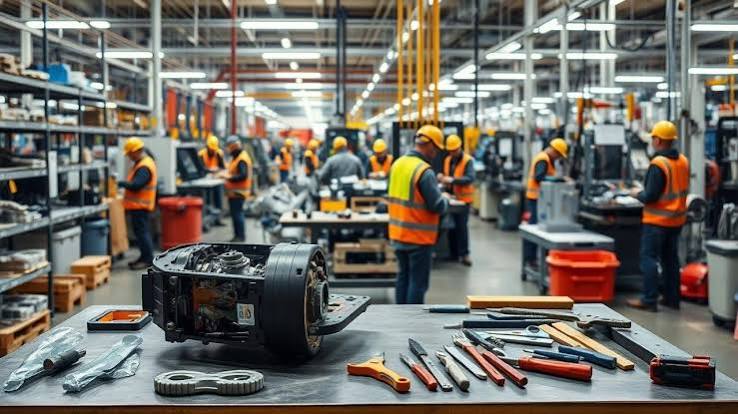
On the industrial side, the latest numbers have provided a more encouraging signal. India’s Index of Industrial Production (IIP) grew 7.3% year-on-year in June 2026, accelerating from 5.1% in May. This was the strongest industrial growth in almost two years.
Manufacturing was the biggest contributor, recording growth of 7.8%. Electricity and gas supply also performed strongly, rising 10.6%, while mining and quarrying grew 1%. Water supply, sewerage and waste management recorded growth of 6.1%.
Several manufacturing industries recorded particularly strong performances. Electrical equipment production jumped 34%, motor vehicles and trailers increased 17.5%, while food-product manufacturing rose 10.8%. Overall, 19 of the 23 manufacturing industry groups recorded positive growth during June.
The industrial numbers suggest that factory activity and investment-related demand have remained reasonably healthy. Strong manufacturing growth is important because it can support employment, business investment, transportation and demand for raw materials.
However, economists and investors will also look beyond the headline IIP number. A favourable base effect contributed to the sharp annual increase, since industrial growth in June 2025 had been relatively weak. The sustainability of the improvement in the coming months will therefore be more important than one strong monthly figure.
For the stock market, the combination of inflation and industrial production could influence sentiment across sectors. Manufacturing, automobiles, capital goods, banks and consumer companies may react differently depending on what the inflation data shows. A combination of manageable inflation and continued industrial growth would generally be viewed positively because it would suggest that economic activity is expanding without an excessive rise in consumer prices.
Investors will also be watching upcoming economic releases. According to the government’s advance release calendar, the next IIP data, covering July 2026, is scheduled for August 28, while the first quarterly GDP estimate for April-June 2026 is scheduled for August 31.
Taken together, these figures will help determine whether India’s current growth momentum is broad-based and sustainable. For now, the June industrial numbers offer a positive signal, while the July inflation reading will provide the other half of the economic picture.
The key question for markets is becoming increasingly clear: can India maintain strong production and domestic economic activity while keeping inflation under control? The answer from the coming data will be important for investors, businesses and policymakers as India moves deeper into FY2026-27.