
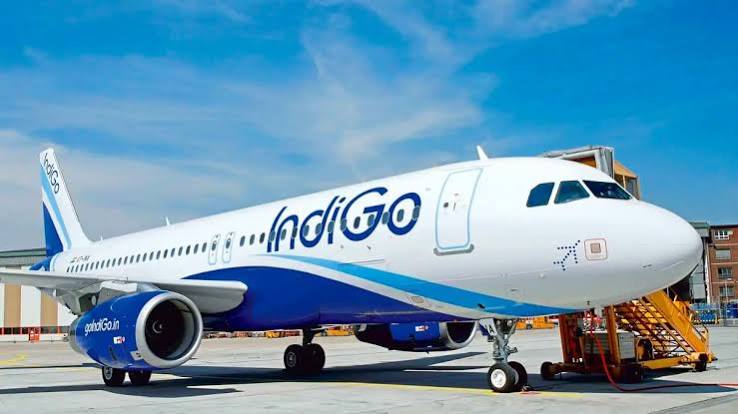
IndiGo continues to play a central role in India’s rapidly developing aviation sector, maintaining a commanding position in the domestic market while expanding its network and preparing for the next phase of growth.
The airline’s dominance is particularly clear in passenger traffic. During the first half of 2026, IndiGo carried around 555.83 lakh domestic passengers, giving it a market share of approximately 64.3%. The Air India Group was the second-largest player with about 25.7% of the market.
IndiGo’s position became even stronger in June. The airline accounted for approximately 66.3% of India’s domestic passenger market, carrying about 89.2 lakh passengers during the month. The increase came even as overall domestic traffic entered the traditionally weaker monsoon period.
The figures show how important IndiGo has become to India’s aviation infrastructure. With such a large share of passengers and flights, the airline connects a huge number of Indian cities and provides an important link between major metropolitan areas, regional centres and smaller airports.
The airline’s growth has been built around a relatively simple strategy: a large network, high aircraft utilisation, competitive fares and a strong focus on operational efficiency. Over time, this approach has allowed IndiGo to capture a significant share of India’s expanding air-travel market
The broader Indian aviation market has also continued to grow, although the pace has not been uniform. Domestic passenger traffic during the first half of 2026 increased around 1.44% year-on-year, while June traffic was affected by the seasonal slowdown associated with the monsoon period.
Despite these short-term fluctuations, the long-term outlook for Indian aviation remains positive. Rising household incomes, urbanisation, business travel, tourism and improved airport connectivity are expected to support demand for air travel over the coming years.
IndiGo is also moving beyond its traditional low-cost-airline model. The company is increasingly looking at premium travel, international expansion and additional services as it seeks to diversify revenue while maintaining its cost advantage. Recent company strategy discussions have emphasised retaining cost discipline even as the airline enters its third decade and expands into higher-value travel segments.
International expansion is becoming increasingly important. IndiGo has been adding overseas destinations and strengthening connectivity with markets across Asia, the Middle East and other regions. A larger international network could help the airline capture a greater share of India’s rapidly growing outbound travel market.
However, the airline’s growth has not been without challenges. Fuel prices remain one of the biggest costs for any airline, and fluctuations in crude-oil and aviation-turbine-fuel prices can have a direct impact on profitability. IndiGo’s June-quarter results reflected this pressure, with the airline’s parent company, InterGlobe Aviation, reporting a ₹237-crore net loss as jet-fuel expenses increased sharply.
The company is therefore balancing two objectives: expanding capacity to meet growing demand while keeping costs under control. This is particularly important in India’s competitive aviation market, where airlines have to manage aircraft costs, airport charges, fuel expenses, employee costs and maintenance.
IndiGo’s scale gives it an advantage in several areas. A larger fleet and network can allow the airline to spread fixed costs across more flights and passengers. It can also provide greater flexibility when allocating aircraft to routes where demand is strongest.
At the same time, the airline needs to maintain reliable operations as its network becomes larger. India’s aviation industry has experienced operational disruptions in recent years, making punctuality, crew planning and customer service increasingly important factors for airlines.
The market is also becoming more competitive. Air India and the wider Air India Group are investing heavily in fleet expansion and international connectivity, while Akasa Air continues to grow its presence. In August 2026, IndiGo remained India’s largest airline by scheduled seat capacity, accounting for roughly half of the country’s available seats, according to OAG data.
For India’s economy, IndiGo’s expansion has significance beyond the airline itself. A growing aviation network supports tourism, business travel, employment, logistics and regional economic activity. New air connections can also make smaller cities more accessible to businesses and investors.
The airline’s continued growth therefore reflects the wider transformation of India’s aviation market. More Indians are travelling by air, airports are expanding and airlines are adding capacity to meet demand.
For IndiGo, the next stage will be about maintaining its market leadership while improving profitability and expanding into international and premium segments. Strong domestic demand provides a solid foundation, but fuel prices, competition and operating costs will remain important risks.
With more than 64% of the domestic market during the first half of 2026 and more than 66% in June, IndiGo remains the dominant force in Indian aviation. Its ability to continue expanding while maintaining cost discipline will be a major factor in determining how India’s aviation industry develops over the next few years.