
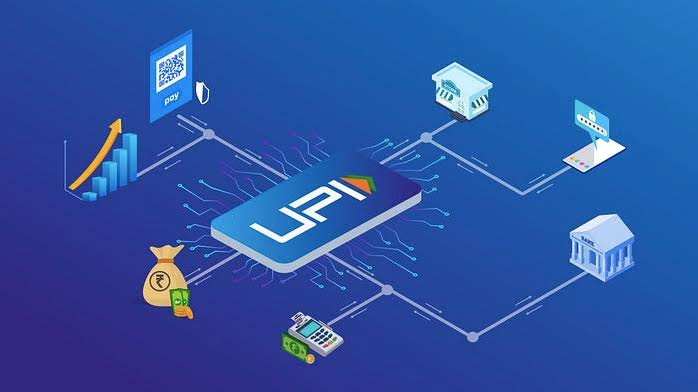
India’s Unified Payments Interface (UPI) could play a much bigger role in the country’s financial ecosystem as the platform increasingly moves beyond simple payments and begins supporting the growth of digital lending and other financial services.
The development reflects how India’s digital-payment infrastructure has evolved since UPI was launched in 2016. What started primarily as a way to transfer money between bank accounts has now become one of the country’s most widely used financial platforms. Industry leaders believe its next phase could involve connecting users with credit and other financial products.
Speaking recently about the future of India’s digital ecosystem, Shivnath Thukral, Vice President for Government Affairs at PhonePe, said UPI is opening new opportunities beyond payments, particularly in digital lending. He also noted that a significant portion of India’s population is still outside the digital-payments ecosystem, meaning there is considerable room for further financial inclusion.

The potential expansion into lending is important because UPI generates a large amount of digital transaction information. When used within appropriate regulatory and consent frameworks, digital financial activity can help lenders better understand a customer’s cash flow and repayment capacity.
This could be particularly useful for people and small businesses that have limited traditional credit histories. A small merchant, for example, may not have extensive financial records but could have a consistent history of receiving digital payments. Such information could potentially help lenders assess creditworthiness more efficiently.
India’s Economic Survey has already highlighted how digital public infrastructure, including UPI, is changing access to credit. Digital payment data can help lenders assess borrowers across different risk categories and potentially expand formal credit access.
The development is also connected with India’s broader digital-finance architecture. The country has been building systems that allow financial information to move between consumers, banks and regulated financial institutions with appropriate consent. Account Aggregators, digital KYC and the Reserve Bank of India’s Unified Lending Interface (ULI) are examples of infrastructure designed to make lending faster and more data-driven.
UPI itself would not become a bank or lender. Instead, its payment infrastructure could become an important part of a wider ecosystem in which banks, non-banking financial companies and regulated fintech firms offer credit products to eligible customers.
One area that has already demonstrated this possibility is credit lines on UPI. Banks and financial institutions can provide pre-approved credit facilities that customers can use through UPI for eligible merchant transactions. This effectively combines the convenience of UPI payments with access to short-term credit.
The next stage could see digital lending become more deeply integrated into everyday financial activity. Customers could potentially receive personalised credit offers based on their financial behaviour, subject to consent, eligibility requirements and regulatory safeguards.
For small businesses, the potential benefits could be significant. MSMEs often face difficulties obtaining formal loans because of limited collateral, incomplete financial records or lengthy documentation requirements. Digital transaction histories could help lenders make faster decisions and provide working-capital facilities to businesses with otherwise limited access to credit.
However, the expansion of UPI-linked lending also brings risks. Faster access to credit can become a problem if consumers are offered loans without adequate assessment of their ability to repay. Digital lending has already faced regulatory scrutiny in India because of concerns surrounding aggressive lending practices, hidden charges, data misuse and recovery methods.
That means the future growth of digital lending will depend heavily on responsible lending standards. Borrowers must clearly understand interest rates, fees, repayment schedules and the consequences of missing payments.