

India’s energy sector received a major boost as Tata Power announced an ambitious long-term growth strategy aimed at doubling its profits and crossing ₹1 lakh crore in annual revenue by FY2030. The company revealed its expansion plans during its Annual General Meeting, highlighting a strong focus on renewable energy, power distribution, transmission infrastructure, and clean energy technologies.
As India continues its transition toward sustainable energy, Tata Power plans to make significant investments in solar power, wind energy, battery storage, rooftop solar installations, electric vehicle charging infrastructure, and smart electricity distribution systems. The company believes that clean energy will be the primary driver of its future growth while supporting India’s goal of reducing carbon emissions.
According to the company’s roadmap, renewable energy will account for a larger share of its generation portfolio over the next few years. Tata Power has already established itself as one of India’s leading renewable energy companies, and the latest announcement reinforces its commitment to accelerating the country’s clean energy transition.
Another major focus area is the expansion of electricity transmission and distribution networks. As electricity demand continues to rise due to urbanization, industrial growth, and increasing use of electric vehicles, stronger power infrastructure will be essential for ensuring reliable and uninterrupted electricity supply. The company plans to modernize its distribution systems using digital technologies that improve efficiency and reduce power losses.
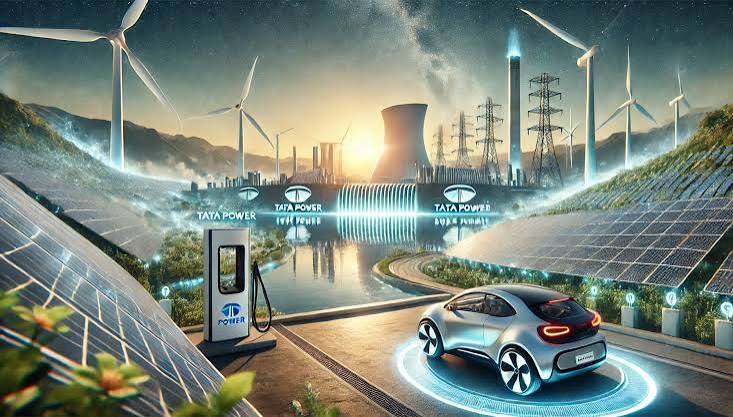
Tata Power also intends to strengthen its rooftop solar business, which has witnessed steady growth from residential, commercial, and industrial consumers. Rising electricity costs and growing awareness about renewable energy have encouraged more households and businesses to install solar panels, helping reduce dependence on conventional grid electricity while lowering energy bills.
The company is also expanding its electric vehicle charging network across India. As EV adoption continues to increase, accessible charging infrastructure has become one of the key requirements for faster growth in the electric mobility sector. Tata Power aims to install more charging stations in cities, highways, commercial hubs, and residential communities to support the growing number of electric vehicles on Indian roads.
Battery energy storage is another important part of the company’s strategy. Energy storage systems help manage the intermittent nature of renewable energy sources such as solar and wind by storing excess electricity and supplying it during periods of high demand. Industry experts believe that large-scale battery storage will become increasingly important as India’s renewable energy capacity expands.
The company’s long-term vision aligns closely with India’s broader energy goals, including achieving net-zero emissions, increasing renewable energy generation, and strengthening energy security. Analysts believe that private sector investments from companies like Tata Power will play a crucial role in helping India meet its future electricity demand while reducing dependence on fossil fuels.
Market experts have welcomed the announcement, noting that sustained investments in renewable energy, grid modernization, and digital infrastructure are likely to create employment opportunities, encourage technological innovation, and improve energy access across the country.
With its latest expansion strategy, Tata Power is positioning itself as a major contributor to India’s evolving energy landscape. The company’s emphasis on clean energy, smart power systems, and sustainable growth reflects the direction in which the Indian power sector is heading. As renewable energy adoption accelerates and electricity demand continues to grow, Tata Power’s investment plans could play a significant role in shaping the future of the country’s energy ecosystem.