
Financial markets are heading into an important week as investors wait for fresh U.S. inflation data that could influence expectations for the Federal Reserve’s next interest-rate decision.
The focus comes after a weaker-than-expected July jobs report changed the mood in financial markets. The report showed signs of cooling in the U.S. labor market, increasing speculation that the Federal Reserve may have more room to consider a change in interest rates later this year. At the same time, inflation remains a major concern, making the upcoming consumer-price report particularly important.
The Federal Reserve currently has its benchmark interest rate in the 3.50% to 3.75% range, after keeping rates unchanged at its July meeting. Investors are now looking ahead to the next policy meeting in September, with the latest economic data likely to play an important role in determining whether policymakers keep rates steady or move toward a cut.
The key report this week will be the July Consumer Price Index (CPI), scheduled for release on Wednesday, August 12. Economists and investors will be watching both headline inflation and core inflation, which excludes food and energy prices. The core figure is especially important because it can provide a clearer picture of underlying price pressures.
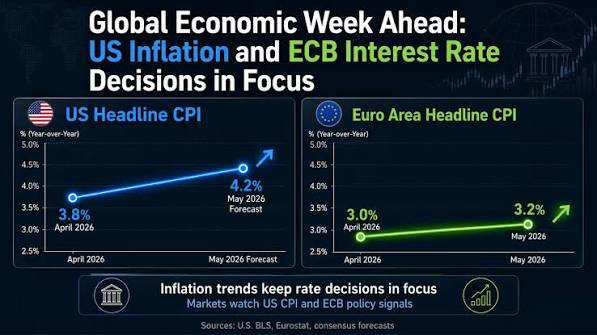
Current expectations point to a relatively modest monthly increase in consumer prices. One forecast cited by Kiplinger expects headline CPI to rise around 0.16% in July, while core CPI is expected to increase about 0.24%. If the figures come in close to or below expectations, markets could interpret the data as evidence that inflation is continuing to cool.
However, a stronger-than-expected inflation reading could create a very different reaction. Higher inflation would make it more difficult for the Fed to cut rates quickly, particularly if price pressures remain persistent in areas such as services. Investors could respond by pushing Treasury yields higher and reducing expectations for an early rate cut.
The inflation report is also arriving at a sensitive moment for U.S. stocks. Wall Street has recently climbed to record levels, helped by strong technology earnings and continued enthusiasm around artificial intelligence companies. According to Reuters, the technology-led rally is now facing an important test from inflation data and changing expectations about Federal Reserve policy.
Interest-rate expectations matter far beyond Wall Street. A change in the Fed’s policy can affect borrowing costs for companies and consumers, mortgage rates, the U.S. dollar, government bonds and investment flows around the world. Lower rates generally make borrowing cheaper and can support economic activity, while higher rates can slow demand and help control inflation.
Markets will also receive other important economic information later in the week. The Producer Price Index is due Thursday, followed by retail-sales data on Friday. Together, these reports will give investors a broader view of price pressures and consumer spending in the U.S. economy.
For now, investors are taking a cautious approach. The weaker jobs data has increased hopes for easier monetary policy, but the Fed still needs convincing evidence that inflation is moving toward its long-term goal.
The Wednesday CPI report could therefore become one of the most important economic releases of the month. A softer reading could strengthen expectations for lower interest rates and provide another boost to stocks. A hotter reading, however, could force markets to reconsider how quickly the Federal Reserve can move.
With U.S. markets already trading near record levels, investors will be watching the inflation numbers closely. The report may not determine the Fed’s next decision by itself, but it could significantly influence the expectations surrounding that decision.