
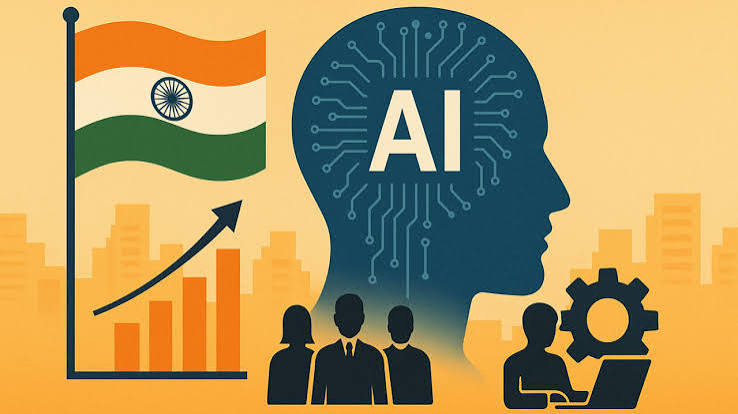
Indian startups are continuing to attract fresh capital in artificial intelligence, deep technology and other technology-focused businesses, despite a more selective funding environment. Investors are increasingly concentrating their money on companies with strong technology, clear business models and the potential to operate at a large scale.
The latest funding activity shows that India’s startup ecosystem remains active. Between August 3 and August 8, Indian startups raised more than $252 million across 23 funding deals, according to industry data. The funding was spread across several sectors, but technology and innovation continued to be important areas of investor interest.
Another weekly analysis put startup funding at around $274.4 million across 22 deals, showing how quickly funding numbers can differ depending on the deals and reporting period included. The broader trend, however, remains clear: capital is still flowing into Indian startups, although investors are becoming more careful about where they deploy it.

Artificial intelligence has emerged as one of the strongest themes in the Indian startup market. Investors are increasingly looking for companies developing AI models, AI infrastructure, enterprise software, automation tools and applications that can solve specific business problems.
The trend is also visible at the venture-capital level. Indian-focused venture funds raised more than $4.5 billion during the first half of 2026, with AI becoming one of the most common investment themes. Several new funds and investment platforms have been created specifically around AI, semiconductors, advanced manufacturing and enterprise technology.
One of the biggest examples of this trend is Sarvam AI, which became India’s latest AI unicorn after raising $234 million at a valuation of $1.5 billion in June. HCLTech led the round with a $150-million investment, while existing and new investors also participated. The company is working on large AI models and technology designed for India’s requirements.
AI infrastructure is attracting particularly large investments. Startups working on computing capacity, cloud platforms and tools needed to develop and operate AI systems require significant amounts of capital because the cost of GPUs, data centres and other infrastructure can be extremely high.
This has contributed to a shift in the overall funding market. India’s startup ecosystem raised approximately $7.2 billion across 652 equity rounds during the first half of 2026, according to Tracxn data reported by NDTV Profit. Although the total amount increased from the previous year, the number of funding rounds fell sharply, indicating that investors are making fewer but larger bets.
That change is important for early-stage startups. Companies with strong technology and proven demand may still be able to raise substantial amounts, while startups without clear revenue or growth prospects may find fundraising more difficult.
Investors are also showing greater interest in deeptech and manufacturing. Semiconductor technology, AI infrastructure, robotics, advanced manufacturing and other technology-heavy sectors are receiving attention as India tries to strengthen its domestic industrial capabilities.
The government is supporting this trend as well. India’s Startup India Fund of Funds 2.0 has a corpus of ₹10,000 crore and is designed to mobilise additional venture capital for the country’s startup ecosystem. Government programmes are also supporting AI, deeptech and technology-focused startups through incubators and seed funding.
For founders, the current environment means that simply having an AI label is unlikely to be enough. Investors are increasingly asking whether a startup has a genuine technological advantage, paying customers, a scalable business model and a realistic path to profitability.
This is particularly important because the AI sector has attracted enormous global investment. Competition is intense, and startups have to demonstrate why their technology is different from larger international platforms and established technology companies.
At the same time, India’s large domestic market gives local startups an advantage. Companies can build products for Indian businesses and consumers before expanding internationally. Areas such as financial technology, healthcare, education, logistics, enterprise software and commerce provide large potential markets for technology-driven businesses.
The funding environment is therefore becoming more disciplined rather than simply weaker. Investors are still willing to commit large amounts of money, but they want stronger evidence that a company can generate long-term value.
For the Indian economy, continued startup funding is important because young technology companies can create jobs, develop new products and attract international capital. Successful startups can also contribute to India’s ambitions in AI, digital infrastructure and advanced manufacturing.
The next phase of India’s startup boom is likely to be defined by quality over quantity. Companies that can combine strong technology with real customer demand and sustainable economics are likely to remain the most attractive to investors.
With AI and technology continuing to dominate investor discussions, Indian startups still have access to significant pools of capital. However, founders now face a higher bar: investors want not just a promising idea, but evidence that the business can scale and eventually become financially sustainable.
The funding activity seen in 2026 suggests that India’s startup ecosystem remains resilient. AI, deeptech and technology infrastructure are emerging as major investment themes, while venture capital firms continue to build dedicated funds for the next generation of Indian technology companies.