
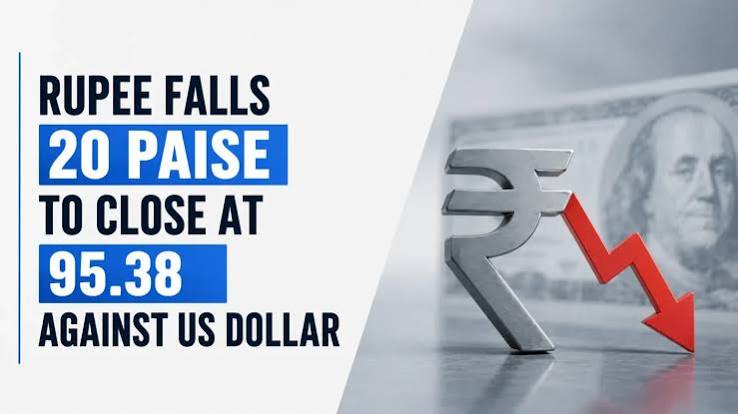
The Indian rupee opened weaker against the US dollar on Tuesday, August 11, trading at ₹95.38 per dollar in early deals. The currency slipped 8 paise from its previous close as pressure from higher crude oil prices and a firm US dollar weighed on market sentiment.
The latest move comes at a time when currency markets are closely watching developments in global oil prices and geopolitical tensions. For India, crude oil prices are particularly important because the country depends heavily on imports to meet its energy requirements. When crude becomes more expensive, Indian importers need more dollars to pay for those purchases, increasing demand for the US currency and putting pressure on the rupee.
The dollar also remained relatively strong in global markets, adding to the pressure on the Indian currency. A stronger dollar generally makes emerging-market currencies such as the rupee more vulnerable, particularly when investors become cautious about taking risks.

Despite the weakness at the start of Tuesday’s session, the rupee has shown some resilience in recent weeks. India’s foreign exchange reserves climbed to around $692.9 billion as of July 31, reaching a near three-month high. The increase was supported in part by strong dollar inflows through the Reserve Bank of India’s special FCNR deposit drive.
The strong reserve position gives the Reserve Bank of India greater room to manage excessive volatility in the foreign exchange market. The central bank can intervene when sharp movements in the rupee create instability, although its objective is generally to smooth extreme fluctuations rather than defend a particular exchange-rate level.
The rupee’s movement is also important for businesses and consumers. A weaker rupee can increase the cost of imported goods, especially crude oil, electronics, machinery and other products that are priced in dollars. Higher import costs can eventually affect companies’ expenses and, in some cases, consumer prices.
On the other hand, exporters can benefit from a weaker rupee because their earnings in foreign currencies become more valuable when converted back into Indian rupees. Companies that earn a significant portion of their revenue from overseas markets may therefore see some benefit from currency depreciation.
For investors, the rupee’s performance is another factor to watch alongside stock-market movements, crude prices, foreign fund flows and global interest-rate expectations. Any major change in these areas could influence the currency during the trading session.
The rupee had recently managed to post a modest weekly gain, supported by foreign inflows and measures by the RBI, but oil-price movements remain a key risk.
Market participants are likely to keep a close eye on crude prices, the US dollar index, foreign investor activity and geopolitical developments during the day. For now, the rupee’s opening at ₹95.38 highlights the continued pressure on India’s currency, even as the country’s strong foreign-exchange reserves provide an important cushion against sudden market swings.